The Question Every U.S. Client Asks First
If you’re considering chemical reverse engineering, you’re likely asking two things:
- What is the exact process?
- How long will it take?
The short answer:
👉 Most projects are completed in 3–6 weeks
👉 Using a 7-step structured process
But more importantly:
This is often the fastest, lowest-risk, and most cost-effective way to develop a chemical product in the U.S.
👉 Start here: Request a formulation analysis quote
Why Reverse Engineering Is Faster Than Traditional R&D
Traditional formulation development:
- 6–18 months
- High trial-and-error
- Uncertain results
Reverse engineering approach:
- Start from a proven product
- Reduce uncertainty
- Focus on optimization
👉 Related: Reverse engineering vs traditional R&D in chemical development
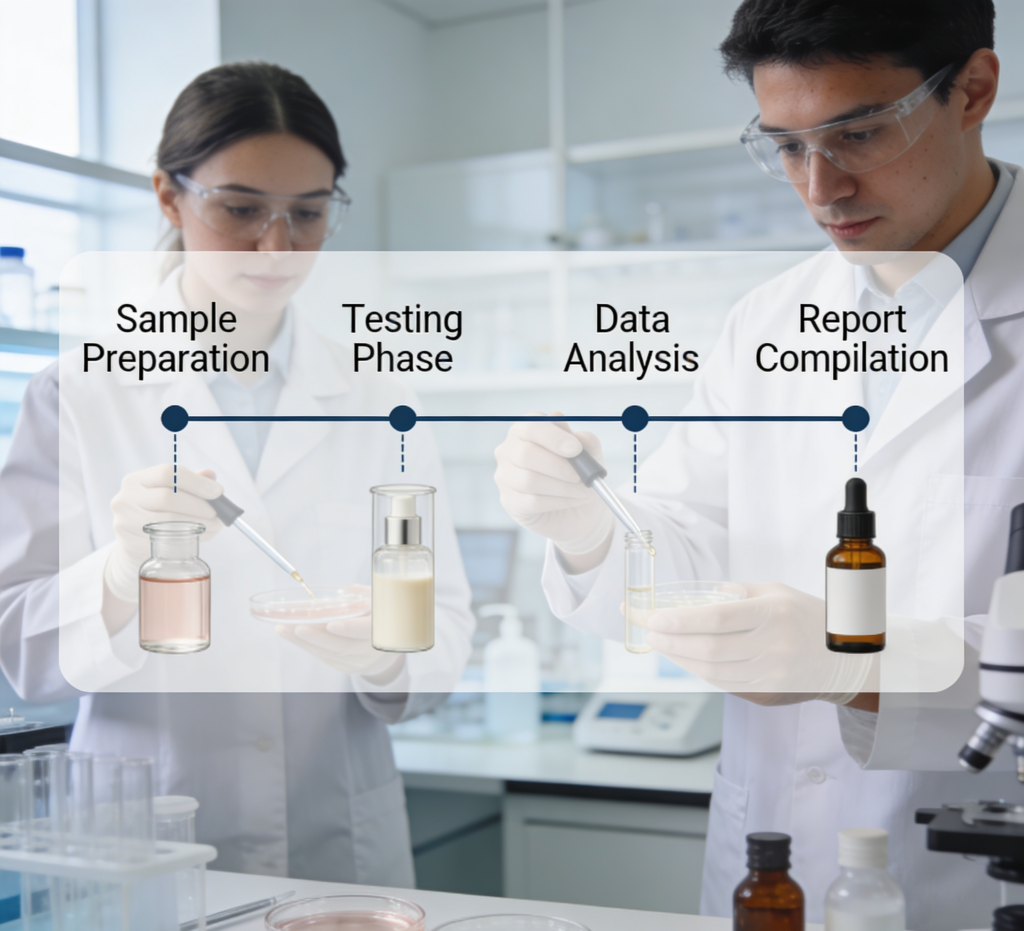
The 7-Step Reverse Engineering Process
At formulationanalysis, we follow a structured workflow designed for speed, accuracy, and risk control.
Step 1: Initial Consultation (3–7 Days)
We begin with a technical consultation to determine:
- Is reverse engineering the right approach?
- What risks or limitations exist?
- What are your goals (replication, cost reduction, improvement)?
👉 Learn more: How to evaluate if your product is suitable for deformulation
This step avoids wasted time and unrealistic expectations.
Step 2: Sample Submission & Preliminary Evaluation (4–7 Days)
You send:
- Product sample
- Optional SDS or technical data
We conduct:
- Initial lab screening
- Complexity assessment
- Feasibility confirmation
- Detailed quotation
👉 Related: What affects formulation analysis cost
Step 3: Agreement & NDA (3–7 Days)
Before any detailed work begins:
- Service agreement is signed
- NDA (confidentiality agreement) is executed
- Payment is completed
This ensures:
✔ Data protection
✔ Clear scope
✔ Defined deliverables
Step 4: Laboratory Deformulation (10–20 Days)
This is the core phase.
We perform:
- Ingredient identification
- Quantitative analysis (±0.1%)
- Functional system breakdown
👉 Explore: Chemical deformulation services
Timeline depends on:
- Number of components
- Analytical difficulty
- Presence of complex systems (e.g., polymers, emulsions)
For highly complex formulations, additional time may be required.
Step 5: Report Delivery & Technical Support
You receive:
- Full formulation breakdown
- Ingredient percentages
- Functional insights
But more importantly:
👉 We provide technical interpretation and Q&A support
👉 Related: What is included in a formulation analysis report
Because data without explanation is not useful.
Step 6: Formulation Optimization (Optional)
If included in your project scope, we proceed with:
- Cost reduction
- Performance improvement
- Ingredient simplification
👉 Learn more: Formulation optimization services
This phase is where most clients gain real commercial advantage.
Step 7: Scale-Up, Sourcing & Manufacturing Support (Optional)
If needed, we support:
- Raw material sourcing
- Supplier recommendations
- Production process guidance
- Contract manufacturing coordination
👉 Explore: Production support and scale-up services
Note:
These services require a separate agreement depending on project scope.
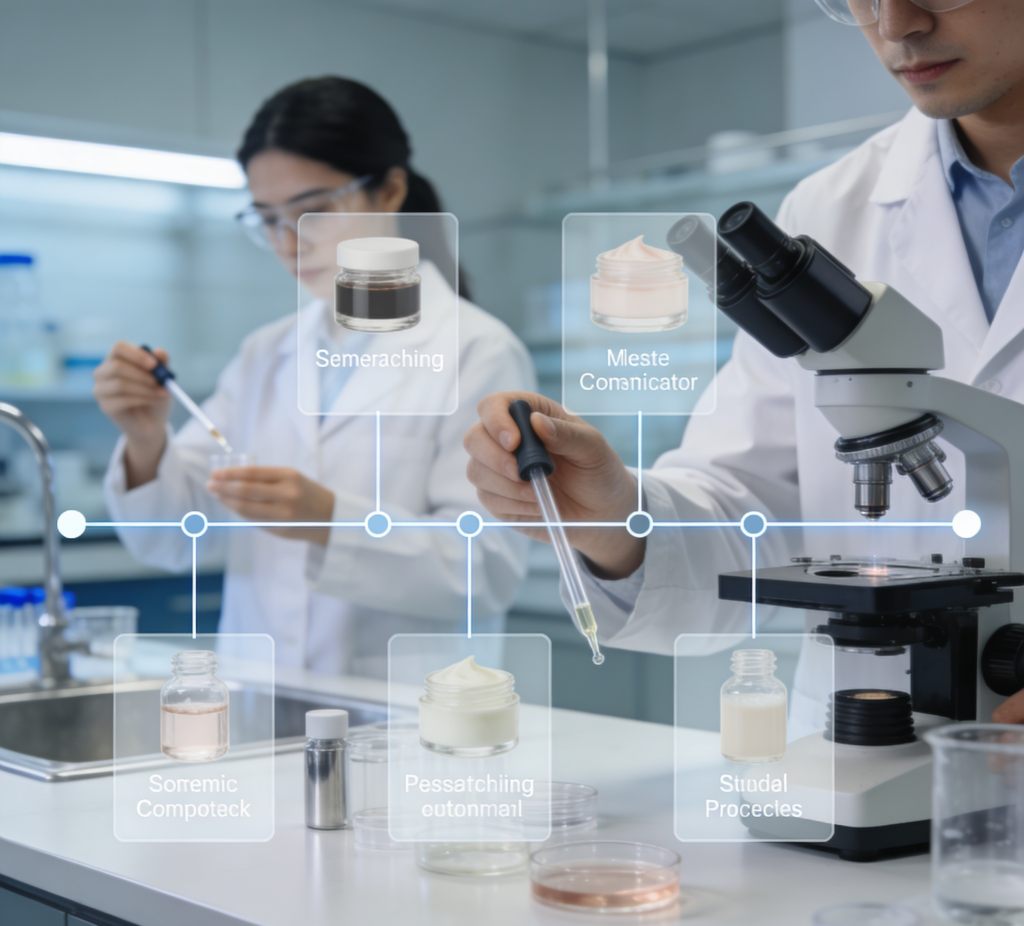
Total Timeline Breakdown (Typical U.S. Projects)
Here’s a realistic timeline summary:
- Initial consultation: 3–7 days
- Sample evaluation: 4–7 days
- Contract & NDA: 3–7 days
- Lab analysis: 10–20 days
👉 Total: Approximately 3–6 weeks
What About Formulation Optimization?
Optimization timelines vary.
Because this stage may involve:
- Multiple reformulation cycles
- Performance testing
- Iterative adjustments
This is the only phase where time cannot be strictly fixed.
But it’s also where the highest ROI is achieved.
Why This Process Minimizes Risk
Compared to traditional R&D, this workflow:
✔ Starts from proven products
✔ Eliminates blind experimentation
✔ Reduces technical uncertainty
✔ Controls development cost
👉 Read more: How reverse engineering reduces product development risk
Industries We Serve
Our formulation analysis services support a wide range of industries in the U.S.:
Personal & Consumer Products
- Cosmetics
- Skincare
- Personal care
- Pet care
👉 Related: Cosmetic formulation analysis
Industrial & Specialty Chemicals
- Industrial cleaners
- Construction coatings
- Lubricants
- Adhesives & resins
👉 Explore: Industrial chemical reverse engineering
Agriculture & Environmental
- Agricultural adjuvants
- Water treatment chemicals
- Surfactants
Health & Performance
- Nutritional supplements
- Fitness formulations
👉 Learn more: Supplement formulation services
When Should You Use Reverse Engineering?
This approach is ideal if you:
- Want to replicate or improve an existing product
- Need faster time-to-market
- Want to reduce formulation cost
- Need full formulation control
👉 Start here: Get your product analyzed
Work With a U.S.-Focused Partner
At formulationanalysis, we specialize in:
- Chemical reverse engineering
- Formulation optimization
- Production and scale-up support
We help U.S. companies launch products:
✔ Faster
✔ Cheaper
✔ With less risk
Get Started (Fast Response Within 24 Hours)
📩 Email: info@formulationanalysis.com
🌐 Website: www.formulationanalysis.com
👉 Submit your request: Contact formulationanalysis
Optional Pre-Evaluation
To speed up your project, send:
- Product sample
- SDS (if available)
- Your objectives
We’ll provide:
✔ Feasibility assessment
✔ Timeline estimate
✔ Cost range
Final Insight
If you’re asking:
“How long will this take?”
What you should really ask is:
“What is the fastest way to launch a reliable product?”
In most cases:
👉 Reverse engineering is the answer.