Reverse Engineering High-Performance Hair Care for Fast, Low-Risk Product Development
Why Leave-In Hair Treatments Are So Hard to Get Right
In the U.S. hair care market, leave-in treatments are one of the most competitive and technically demanding product categories. Consumers expect instant detangling, smoothness, heat protection, frizz control, and long-lasting conditioning—all in a lightweight, non-greasy format.
For emerging brands and manufacturers, the challenge is clear:
- Why do some leave-in products feel silky and weightless, while others feel sticky or heavy?
- How do leading brands balance silicone blends and conditioning polymers without buildup?
- What actually delivers heat protection up to 230°C, and how is it stabilized?
- How can you replicate performance without overspending on raw materials?
Trial-and-error formulation is slow, expensive, and unpredictable. This is where formulation analysis and reverse engineering become commercially decisive.
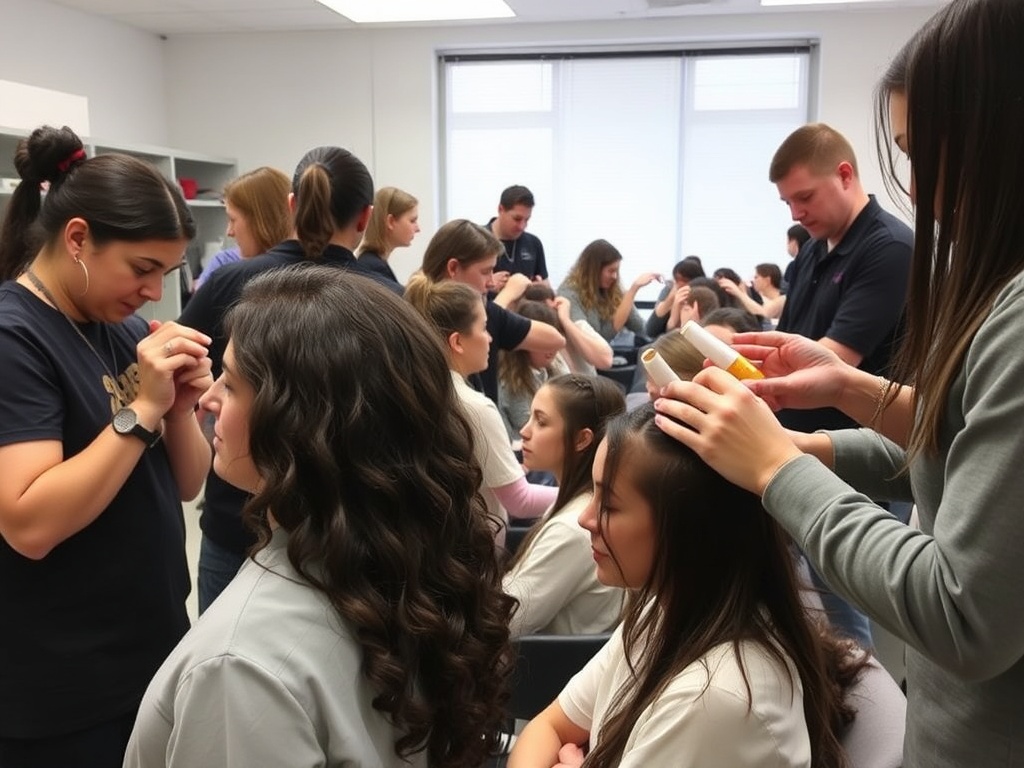
Case Study: Reverse Engineering a Premium Leave-In Treatment
Client Profile
A U.S.-based private label manufacturer wanted to launch its own branded leave-in hair treatment line. They were already producing basic conditioners but lacked the formulation expertise to compete with premium salon-grade products.
Objectives
The client’s goals were highly practical:
- Benchmark a top-selling leave-in treatment in the U.S. market
- Identify the functional ingredient system behind performance claims
- Develop a cost-optimized formula with equivalent or improved performance
- Ensure the product is ready for scale-up and contract manufacturing
- Reduce development time from 6–12 months to under 8 weeks
Step 1: Deconstructing the Formula – What Really Matters?
Through advanced formulation analysis, we moved beyond the label and identified the true performance drivers.
1. Silicone Blend System (Slip, Shine, Heat Protection)
Most high-performance leave-in treatments rely on a multi-silicone system, not a single ingredient.
We identified:
- Volatile silicones (for quick-dry, lightweight feel)
- Amino-functional silicones (for targeted hair repair and adhesion)
- High molecular weight silicones (for film formation and gloss)
Insight:
The ratio—not just the presence—of silicones determines whether the product feels premium or greasy.
2. Conditioning Polymer Network (Detangling + Long-Lasting Softness)
Label claims often mention generic “conditioning agents,” but analysis revealed a synergistic polymer system, including:
- Cationic polymers for electrostatic binding to damaged hair
- Film-forming polymers for humidity resistance
- Deposition enhancers to improve rinse-free performance
Insight:
Top products don’t rely on fatty alcohols alone—they use engineered polymer systems for durability and sensory performance.
3. Heat Protection Mechanism (Real vs Marketing Claims)
Heat protection is one of the most misunderstood aspects.
Our analysis showed:
- Specific silicones and quaternary compounds forming thermal barrier films
- Protein derivatives contributing to moisture retention under heat stress
- Stabilizers preventing degradation during styling
Insight:
Many “heat protection” claims are weak. Real protection requires film integrity at high temperatures, not just marketing ingredients.
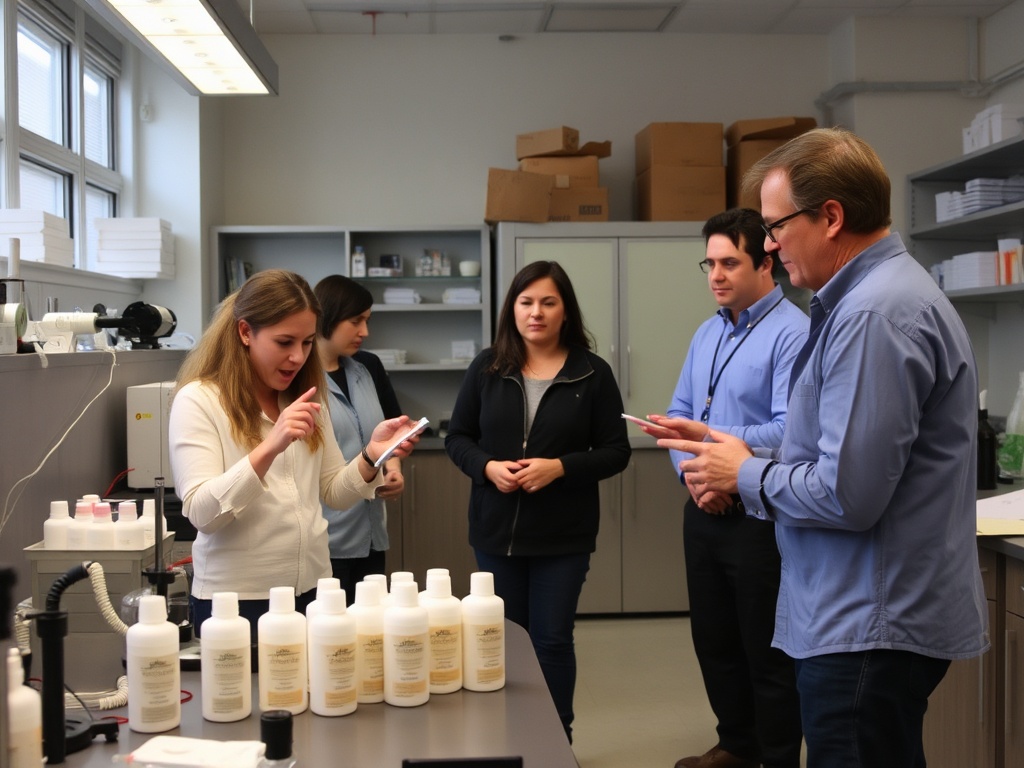
Step 2: From Analysis to Action – Reformulating for Commercial Success
Reverse engineering is not about copying—it’s about strategic replication and improvement.
We developed a customized formulation roadmap:
Performance Matching
- Replicated sensory profile (spreadability, absorption, after-feel)
- Matched detangling efficiency and anti-frizz performance
- Verified heat protection behavior under controlled conditions
Cost Optimization
- Replaced high-cost branded silicones with functionally equivalent alternatives
- Simplified polymer system without sacrificing performance
- Reduced total formulation cost by 18–25%
Regulatory Alignment (U.S. Market)
- Ensured compliance with U.S. cosmetic regulations
- Reviewed ingredient safety and labeling requirements
- Prepared documentation for commercial launch
Step 3: Scaling Up – From Lab to Manufacturing
A common failure point in product development is scale-up inconsistency.
We supported the client with:
Raw Material Sourcing
- Identified reliable U.S. and global suppliers
- Ensured consistency in silicone viscosity and polymer grades
- Prevented formulation drift during production
Process Optimization
- Defined mixing order and shear conditions
- Controlled emulsion stability and viscosity development
- Minimized batch-to-batch variation
Contract Manufacturing Support
- Matched the client with suitable contract manufacturers
- Provided production guidelines and QC parameters
- Ensured smooth transition from pilot batch to full-scale production
Results: Speed, Cost, and Market Readiness
The impact was measurable:
- Development time reduced by over 60%
- First commercial batch approved without reformulation cycles
- Production cost significantly lowered while maintaining premium positioning
- Successfully launched a competitive branded leave-in treatment in the U.S. market
Most importantly, the client avoided months of uncertainty and costly trial-and-error.
Why Reverse Engineering Works for Hair Care Brands
For companies entering or expanding in the hair care sector, reverse engineering provides a data-driven shortcut to performance.
Instead of Guessing, You Get:
- A clear understanding of what actually drives product performance
- The ability to benchmark against proven market leaders
- Faster transition from concept to shelf-ready product
Typical Pain Points We Solve
If you are developing leave-in treatments, you may be facing:
- Products feel too heavy or too light
- Poor detangling performance
- Lack of real heat protection
- High formulation cost with unclear value
- Difficulty scaling from lab to manufacturing
These are not random issues—they are formulation architecture problems. And they can be solved systematically.
Our Core Services for U.S. Clients
We support hair care brands, private label manufacturers, and chemical companies with:
1. Reverse Engineering & Formulation Analysis
- Ingredient identification (qualitative and quantitative)
- Functional system breakdown (silicones, polymers, actives)
- Performance mechanism interpretation
2. Formula Optimization & Custom Development
- Cost reduction without performance loss
- Sensory and stability improvements
- Market-specific customization (e.g., U.S. climate and consumer preferences)
3. Raw Material Sourcing Support
- Supplier recommendations
- Alternative ingredient matching
- Cost-performance benchmarking
4. Manufacturing & Scale-Up Guidance
- Process design and optimization
- Stability and compatibility testing
- Production troubleshooting
5. Contract Manufacturing Coordination
- Factory matching (U.S. and overseas)
- Production documentation support
- Quality control framework
Who This Is For
This approach is particularly valuable if you are:
- A private label manufacturer wanting to launch your own brand
- A startup hair care brand aiming to compete with premium products
- A chemical company entering personal care applications
- A salon brand looking to commercialize proprietary formulations
Final Takeaway: Faster, Smarter, Lower-Risk Product Development
In today’s competitive U.S. hair care market, success is not just about having a good idea—it’s about executing faster and more precisely than competitors.
Reverse engineering allows you to:
- Shorten development cycles dramatically
- Minimize formulation risk
- Control costs from the start
- Launch with confidence using proven technology frameworks
If your goal is to bring a high-performance leave-in treatment to market—without wasting time and budget—this approach is not optional. It is a strategic advantage.
Call to Action
If you are planning to develop or improve a leave-in hair treatment, we can help you:
- Analyze benchmark products
- Build a high-performance, cost-effective formulation
- Scale production with minimal risk
Contact us today to discuss your project and get a tailored formulation strategy.