A Real-World Case Study in Industrial Cleaner Reverse Engineering, Formula Optimization, Raw Material Sourcing, and Production Readiness
For many industrial cleaning companies, the biggest barrier to launching a new product is not finding a market.
The market is already there.
Customers are already buying degreasers, hard-surface cleaners, equipment cleaners, alkaline cleaners, acidic cleaners, and specialty industrial cleaning products every day. Distributors already know which products move. Contractors already know which products perform. End users already have products they trust.
The problem is often much simpler:
The company does not own the formulation.
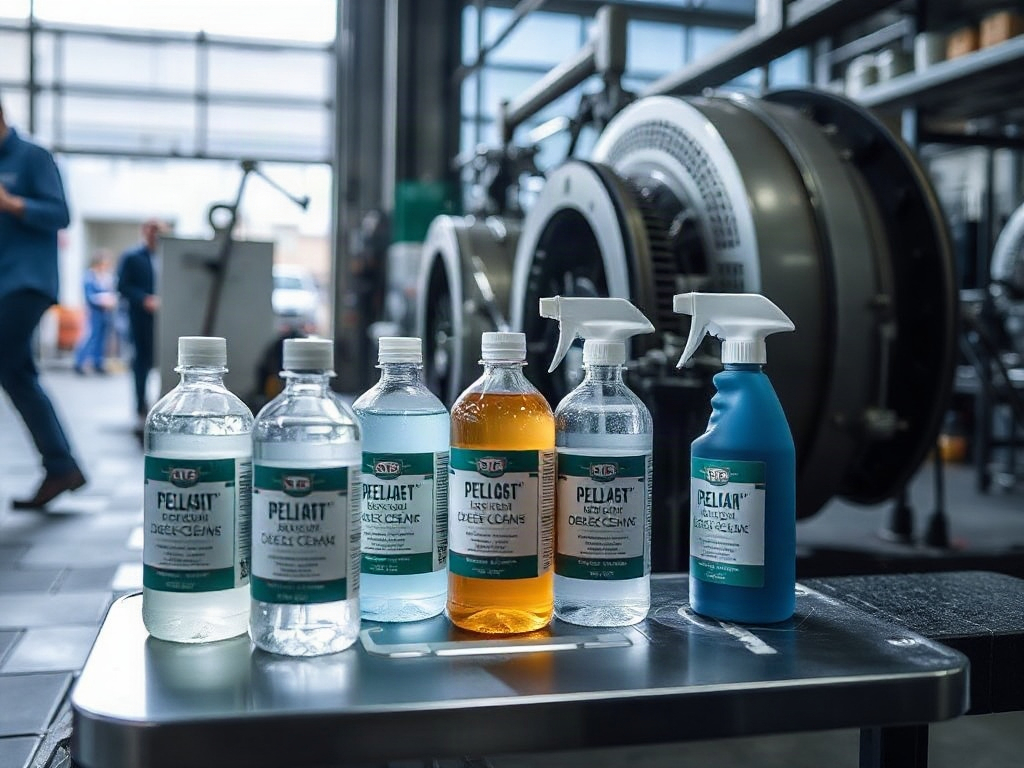
A distributor may have sold the same cleaning product for years. A manufacturer may have private-labeled a product from another supplier. A regional chemical company may know exactly which competitor’s cleaner customers prefer.
But when the company wants to launch its own brand, it suddenly faces a difficult question:
How do we develop something that performs like the product customers already like—without spending years and hundreds of thousands of dollars experimenting from scratch?
This is where chemical reverse engineering can change the economics of product development.
Instead of starting with a blank sheet of paper, a company can begin with a commercially proven product, understand its formulation structure, identify the major chemical components, determine approximate concentration ranges, and then use that information as the technical foundation for a new formulation.
The objective is not simply to copy a product.
The objective is to turn market knowledge into formulation knowledge—and formulation knowledge into a commercially viable product.
The Business Problem: “We Know What Sells, But We Don’t Know How to Make It”
The company in this case study was a mid-sized industrial chemical business located in one of the major U.S. manufacturing and chemical-production regions.
The company already had relationships with industrial customers and distributors. It understood the market and knew what customers were looking for.
There was one particular multi-purpose industrial cleaner that repeatedly came up in customer conversations.
Customers liked it because it:
- Removed industrial soil effectively
- Worked across multiple hard surfaces
- Produced consistent cleaning results
- Rinsed relatively cleanly
- Left limited visible residue or streaking
- Performed reliably in commercial and industrial environments
The company wanted to develop a competing product under its own brand.
But there was a problem.
They did not have access to the original formulation.
They could purchase the finished product, but the label did not tell them enough to reproduce the product. The SDS provided useful hazard and safety information, but it was not a production formula. Even if individual ingredients could be guessed, the company still would not know the exact formulation architecture or the relative balance between surfactants, solvents, builders, chelating agents, alkalinity sources, hydrotropes, and other additives.
The traditional approach would have been to hire formulators and begin testing dozens—or potentially hundreds—of experimental batches.
That would mean:
Guess → formulate → test → fail → modify → reformulate → test again.
For a small or mid-sized chemical company, that process can become expensive very quickly.
The company wanted a different approach.
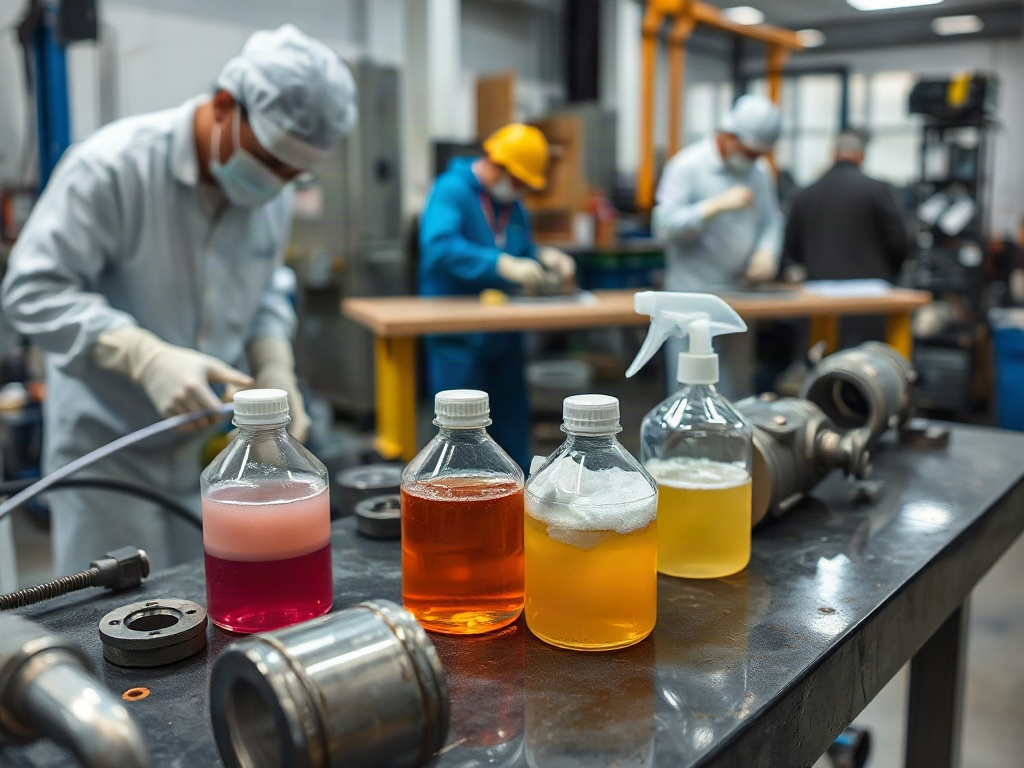
The Goal Was Not to Copy a Product. It Was to Build a Better Starting Point.
The project was therefore structured around five commercial objectives:
1. Develop an independent formulation foundation
The company wanted enough chemical information to stop guessing and begin development from a technically informed starting point.
2. Match the benchmark product’s core performance
The new cleaner needed to approach the benchmark in the areas that mattered most to customers:
- Cleaning efficiency
- Soil removal
- Surface compatibility
- Rinsability
- Residue control
- Appearance after drying
3. Reduce formulation cost
The company did not want to create a premium product that performed well but was too expensive to sell.
The target was a commercially competitive cost-per-gallon.
4. Reduce dependence on one supplier
The new formulation needed to be based on commercially available raw materials that could be sourced through a practical U.S. supply chain.
5. Reach production faster
The ultimate goal was not an analytical report.
It was a product that could eventually be manufactured, packaged, sold, and scaled.
That distinction is extremely important.
Reverse engineering is valuable only when the information can be converted into a usable formulation.
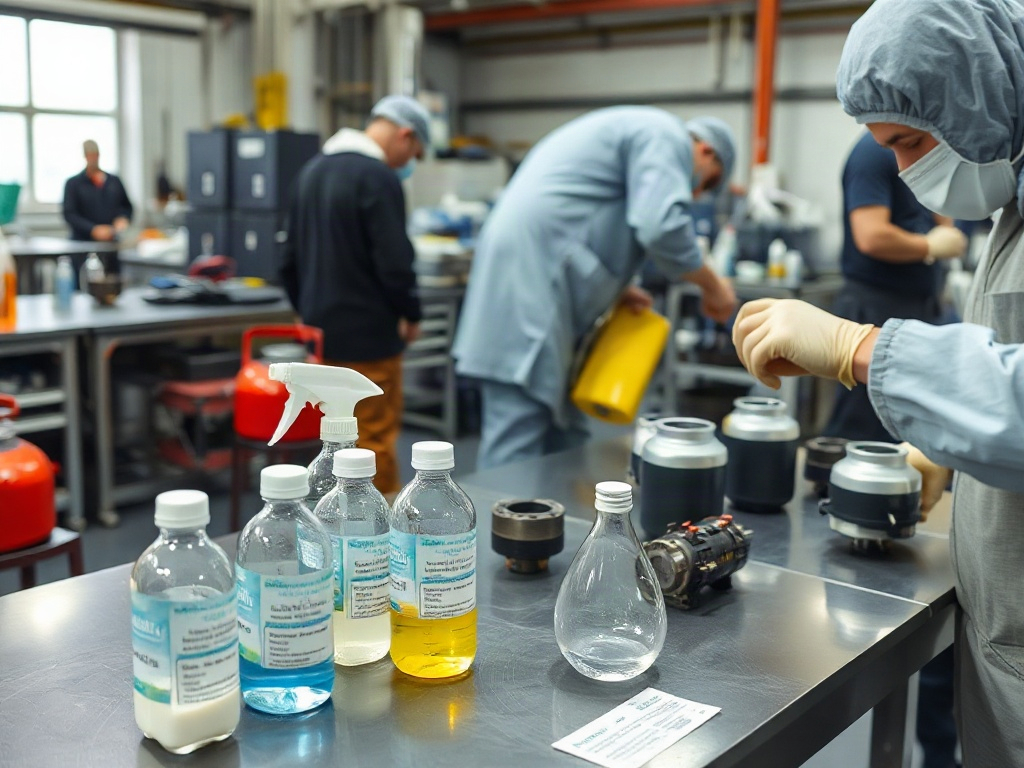
Step 1: Start With a Proven Commercial Product
The first step was competitive benchmarking.
Rather than asking:
“What ingredients should we put into a new industrial cleaner?”
the better question was:
“What chemical system is already delivering the performance the market wants?”
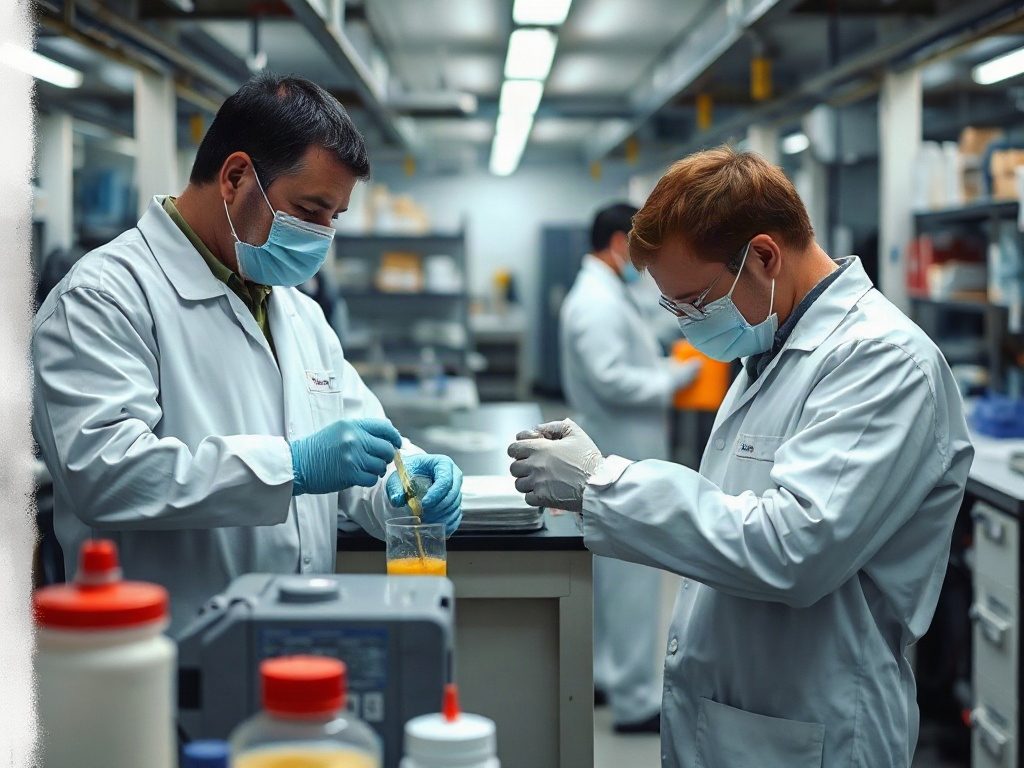
The benchmark sample was submitted for chemical formulation analysis.
The objective was to understand the product at several levels.
Chemical identity
What types of chemical materials were present?
Functional structure
What role did each major component appear to play?
For example:
- Primary surfactants
- Secondary surfactants
- Solvents
- Builders
- Chelating agents
- Hydrotropes
- Alkalinity sources
- Preservatives
- Performance additives
- Water and other carrier components
Quantitative composition
Where technically feasible, the analysis was used to establish approximate concentration ranges and quantitative targets for the major components.
This is where reverse engineering becomes much more valuable than ordinary laboratory testing.
A basic laboratory test may tell you that a product contains surfactants.
A formulation analysis asks a much more useful question:
Which surfactant system is being used, approximately how much is being used, and how does it fit into the overall formulation?
Our Industrial Cleaner Reverse Engineering service is designed around this type of competitive benchmarking and formulation analysis.
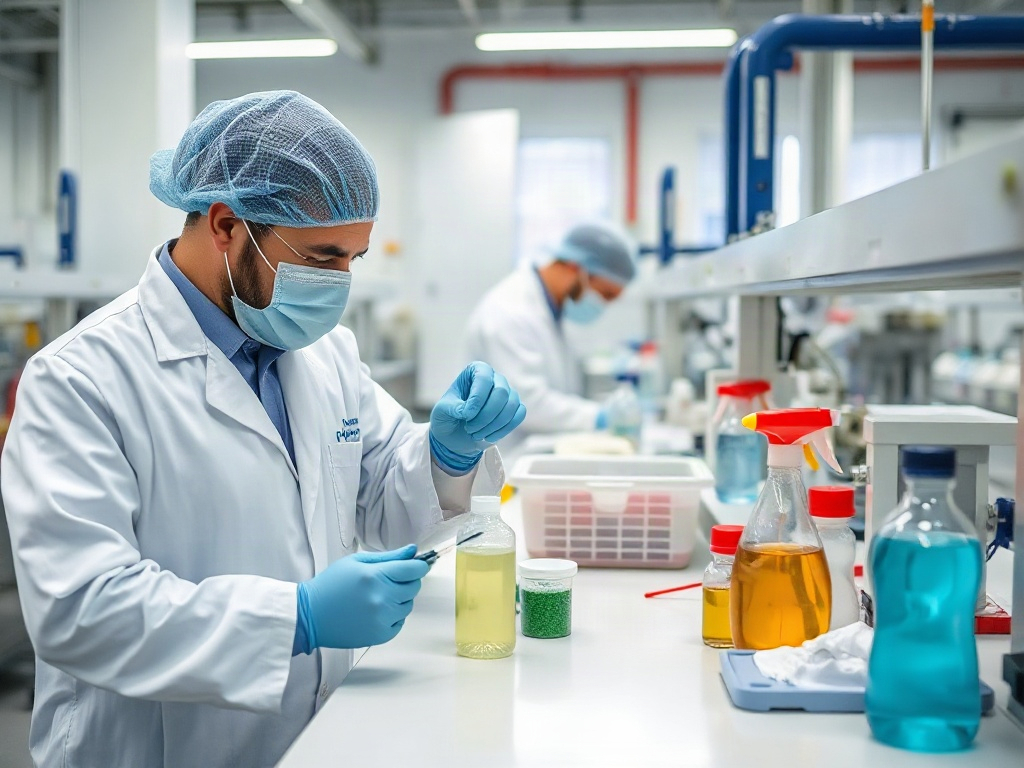
Step 2: The Analysis Revealed Where the Performance Was Coming From
One of the most important findings was that the benchmark cleaner’s performance was not dependent on a single “magic” ingredient.
The performance came from the interaction between several formulation components.
This is common in professional industrial cleaning chemistry.
A formulation may contain several surfactants, for example, but each one can contribute differently to:
- Wetting
- Soil penetration
- Emulsification
- Grease removal
- Suspension
- Rinsability
- Surface appearance
Likewise, solvents can improve solvency and cleaning power, while builders and chelating agents can improve performance in hard-water conditions.
This is why simply reading an ingredient list—or trying to identify one “active ingredient”—usually does not provide enough information to reproduce a high-performing industrial cleaner.
The formulation architecture matters.
In this case, the analysis gave the development team a much clearer technical map of what they were trying to reproduce.
That changed the project from an open-ended formulation exercise into a controlled development program.
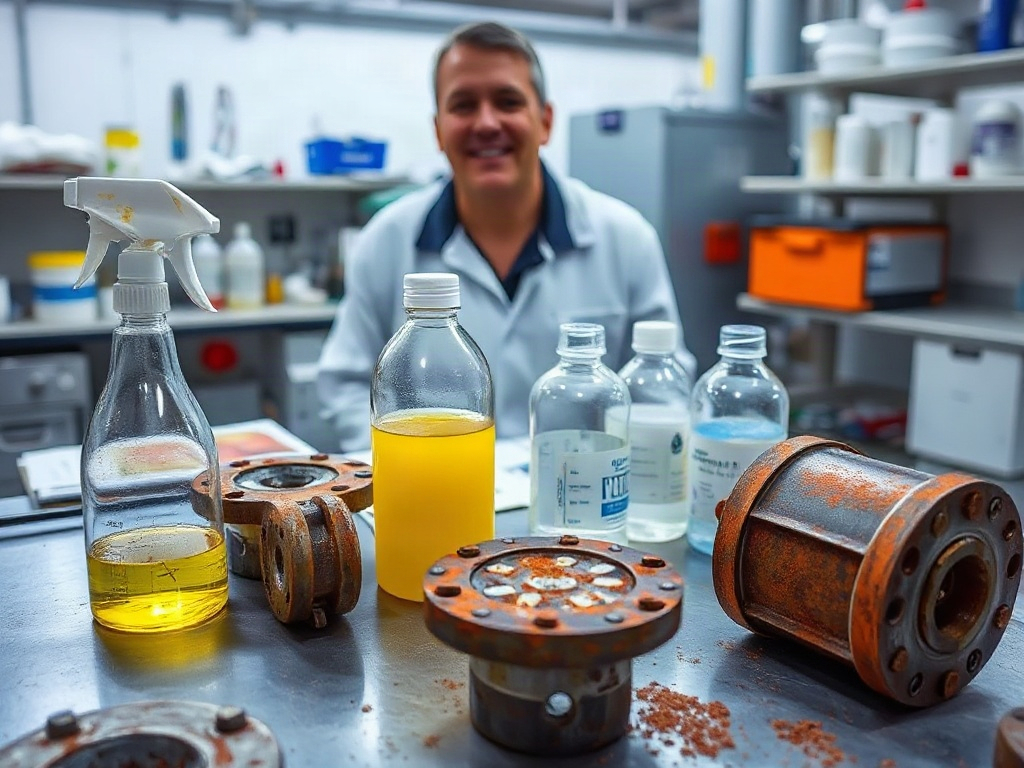
Step 3: The Formula Was Not Reproduced Blindly
This was an important part of the project.
The goal was not to take the analytical results and blindly reproduce the benchmark product.
Instead, the formulation data became the starting point for optimization.
The customer had its own commercial requirements.
The new product needed to:
- Maintain strong cleaning performance
- Use commercially available raw materials
- Fit the company’s existing manufacturing capabilities
- Meet a defined cost target
- Provide consistent batch-to-batch performance
- Be suitable for the company’s target customers
- Create room for future product differentiation
This is where formulation optimization becomes critical.
A benchmark product may contain expensive ingredients, legacy raw materials, unnecessary formulation redundancy, or components that are not ideal for a new manufacturing operation.
Simply reproducing the original formulation may therefore not be the best commercial decision.
The better strategy is:
Analyze → Understand → Optimize → Validate → Manufacture.
Our Formula Optimization service supports this transition from analytical information to a commercially practical formulation.
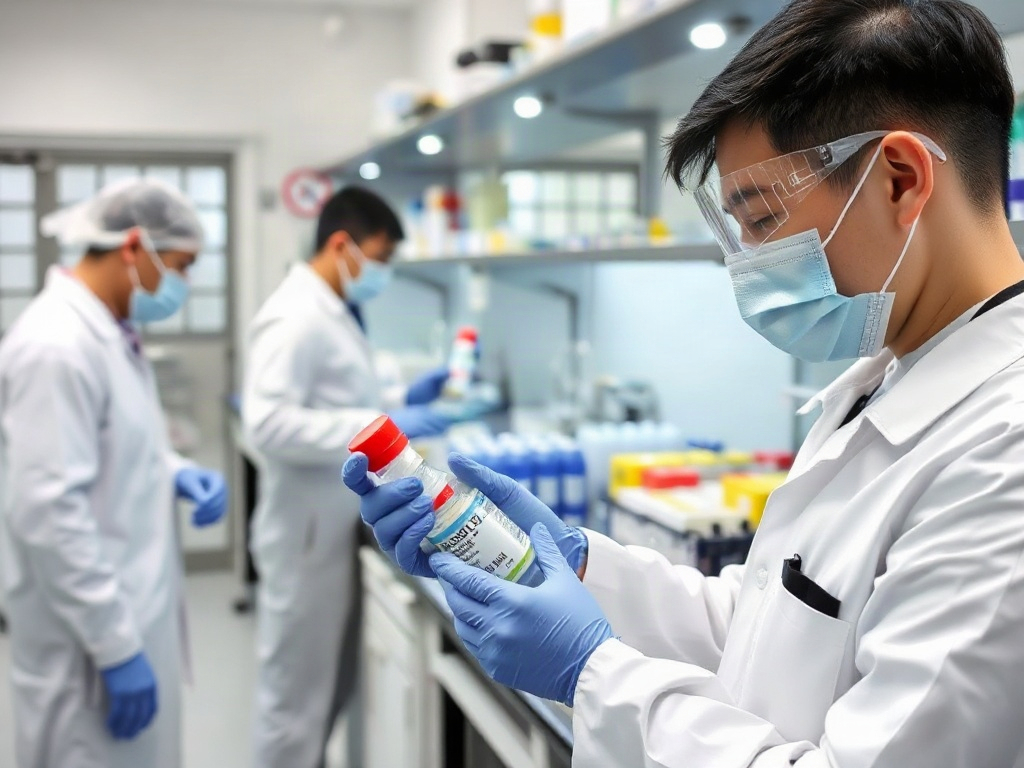
Step 4: Cost Became a Formulation Engineering Problem
For a chemical manufacturer, cost reduction is not simply about finding the cheapest raw material.
Replacing an ingredient with a cheaper material can easily destroy performance.
The real question is:
How can the formulation achieve the required performance at the lowest practical total raw-material cost?
The team therefore reviewed the formulation from a cost-performance perspective.
Several areas were evaluated:
- Surfactant selection
- Surfactant ratios
- Solvent selection
- Builder concentration
- Functional redundancy
- Raw material availability
- Supplier alternatives
- Manufacturing concentration
- Packaging considerations
The objective was not to make the cheapest cleaner possible.
It was to create the lowest-cost formulation capable of meeting the target performance requirements.
That distinction can make a major difference in commercial profitability.
For example, a formulation that costs $1.00 less per gallon can represent a very different business opportunity when production reaches 10,000, 50,000, or 100,000 gallons per year.
A small formulation improvement can become a substantial annual margin improvement.
Step 5: Raw Material Sourcing Was Part of the R&D Process
Another lesson from the project was that a formulation is not truly commercial until the raw materials can actually be purchased at a reasonable cost.
A laboratory formula might look excellent on paper.
But what happens if:
- The key surfactant has only one supplier?
- The supplier requires a large minimum order?
- The material has unpredictable lead times?
- The raw material is significantly more expensive in the U.S.?
- The material changes specification from one supplier to another?
These issues can destroy the economics of an otherwise successful formulation.
For this reason, raw material sourcing was considered during formulation development rather than after the formula had already been finalized.
Where appropriate, alternative commercial raw materials were evaluated based on:
- Chemical functionality
- Active content
- Compatibility
- Availability
- Cost
- Supplier reliability
- Manufacturing practicality
This approach helped turn the laboratory formulation into a more realistic commercial formulation.
FormulationAnalysis also provides raw material procurement and production guidance to help companies move from chemical analysis toward practical manufacturing.
Step 6: From Laboratory Formula to Production
There is another major difference between a formula that works in a laboratory beaker and a formula that works in a manufacturing tank.
Scale-up.
A formulation can behave perfectly at 1 liter and behave differently at 500 gallons.
Mixing order matters.
Addition rate matters.
Temperature can matter.
Agitation can matter.
The sequence in which surfactants, solvents, builders, additives, and water are introduced can affect the final product.
Therefore, production guidance was incorporated into the development process.
The objective was to establish a practical manufacturing procedure that could be transferred from development batches to larger production batches.
This reduced another common source of wasted time:
discovering manufacturing problems only after the company has already purchased large quantities of raw materials.
What Did the Customer Ultimately Gain?
The most important result was not simply a laboratory report.
The company gained something much more commercially valuable:
A path from “I want this product” to “I can manufacture my own version.”
The reverse engineering project provided the technical foundation needed to:
1. Understand the benchmark product
Instead of relying on assumptions, the company had analytical information about the formulation structure.
2. Establish a realistic formulation target
The development team could work from measured chemical information rather than starting with arbitrary ingredient combinations.
3. Optimize the formula
The benchmark became a reference point—not a limitation.
The new formulation could be adjusted for cost, performance, raw-material availability, and the company’s target market.
4. Build supplier independence
The company could identify suitable raw materials and evaluate alternative suppliers rather than remaining dependent on the original finished-product supplier.
5. Establish a production pathway
The formulation could be translated into a practical manufacturing process.
6. Develop its own branded product
Most importantly, the company moved closer to controlling its own product, rather than simply reselling someone else’s chemistry.
The Bigger Lesson: You Do Not Always Need to Invent From Scratch
This is the part many growing chemical companies overlook.
There is a common assumption that product development means inventing something completely new.
In reality, many successful industrial products are improvements on technologies that already exist.
A company may already know:
- Which product customers prefer
- What performance they expect
- What price the market will accept
- Which applications are growing
- Which competitors are selling successfully
That is valuable market intelligence.
The missing piece may simply be the chemistry.
Reverse engineering can connect the two.
Instead of spending months asking:
“What formulation should we try?”
you can begin with:
“We know what already works. Let’s understand why it works and then engineer a formulation around our own commercial requirements.”
That can dramatically reduce the amount of blind experimentation required.
Reverse Engineering Is Only the First Step
A successful product-development program does not end when the laboratory report is delivered.
For companies that want to build a complete product line, the development pathway can look like this:
Market Product
↓
Chemical Reverse Engineering
↓
Formulation Reconstruction
↓
Formula Optimization
↓
Cost Targeting
↓
Raw Material Sourcing
↓
Pilot Batch
↓
Production Guidance
↓
Manufacturing
↓
Packaging & Branding
↓
Market Launch
This is the model behind our broader approach at FormulationAnalysis.
We combine chemical reverse engineering with formulation optimization, raw material sourcing, production guidance, and, where appropriate, contract manufacturing support.
The goal is to reduce the number of separate technical handoffs between “I have an idea” and “I have a product.”
Who Is This Approach For?
This approach is particularly useful for U.S. companies that already understand their market but do not have a large internal formulation department.
For example:
Industrial Chemical Distributors
You already sell cleaning chemicals and know which products customers want—but you want to launch your own brand.
Private Label Companies
You have customers and distribution but need a technically reliable formulation behind your brand.
Contract Manufacturers
You want to add new industrial cleaning products to your manufacturing portfolio without developing every formula completely from scratch.
Chemical Entrepreneurs
You have identified a product opportunity but do not have the chemistry team to develop the formulation internally.
Established Manufacturers
You already manufacture chemicals but want to reduce the cost or improve the performance of an existing product.
Companies Dependent on Overseas Suppliers
You want to bring formulation control closer to your U.S. operation and reduce dependence on a finished-product supplier.
The Real Advantage Is Reduced Trial and Error
Nobody can eliminate all product-development risk.
A formulation still needs appropriate testing.
Performance still needs to be validated.
Raw materials still need to be qualified.
Manufacturing still needs to be confirmed at scale.
Regulatory and product-specific requirements still need to be addressed.
But there is a major difference between controlled development and blind experimentation.
If you begin with an unknown formulation and test dozens of combinations, every failed batch consumes:
- Raw materials
- Labor
- Laboratory time
- Manufacturing capacity
- Development time
- Management attention
Reverse engineering does not remove the need for development.
It gives development a technical starting point.
That is why it can be particularly attractive to small and mid-sized chemical companies.
The objective is simple:
Spend your R&D budget learning what you actually need to know—not rediscovering chemistry that the market has already validated.
What If You Don’t Have a Formula or R&D Team?
That is exactly the situation where this model can make the most sense.
You do not necessarily need a PhD chemist on staff to start developing your own industrial cleaning product.
You may already have the most valuable information:
You know what customers are buying.
If you have a successful commercial product that you would like to benchmark, improve, or use as the foundation for your own branded product, the next step is to understand its chemistry.
From there, the development process can be structured around your actual business objectives:
- What performance do you need?
- What is your target cost per gallon?
- What raw materials can you source?
- What production equipment do you have?
- What packaging do you want?
- Who is your target customer?
- What claims do you want to make?
- Do you want to manufacture internally or use a contract manufacturer?
Those questions turn reverse engineering from a laboratory exercise into a product-development strategy.
Build Your Own Industrial Cleaning Product Without Starting From Zero
The industrial cleaning market does not always reward the company with the most complicated formula.
It often rewards the company that can deliver the right combination of:
Performance + Cost + Consistency + Supply + Speed.
If you already know that a particular industrial cleaner works in the market, you have already completed one of the hardest parts of product development:
You have identified a product customers are willing to buy.
The next step is to understand the chemistry behind it.
From there, the right technical process can help you develop a formulation that is optimized for your own brand, target cost, raw-material supply chain, and manufacturing requirements.
At FormulationAnalysis, our role is to help bridge that gap—from market product to chemical understanding, from chemical understanding to optimized formulation, and from formulation to production.
If you have a commercial industrial cleaner that you would like to benchmark, improve, or use as the starting point for your own product, contact FormulationAnalysis for a confidential consultation.
You do not need to start with a blank page.
Start with a product that already works. Then engineer it into a product you can own, optimize, manufacture, and sell.