Developing a new adhesive from scratch can be expensive, time-consuming, and unpredictable.
You need to select the right polymer or resin system, additives, fillers, solvents or carriers, curing agents, and processing conditions. Then you make a prototype, test it, change the formulation, make another prototype, and repeat the process.
Sometimes that is exactly what good R&D requires.
But there is another approach that can make the early stages of adhesive development much more efficient:
Start with an existing adhesive that already works.
This is the basic idea behind adhesive deformulation and reverse engineering.
Instead of spending months trying to determine what type of formulation might work, you begin with a real commercial product and investigate its chemical composition and formulation structure.
The resulting information can then be used to develop your own formulation, reduce unnecessary trial-and-error, improve performance, control raw material costs, and move toward production more efficiently.
For U.S. manufacturers, private-label brands, industrial suppliers, and product development teams, this can provide a practical alternative to starting an adhesive project with a completely blank formulation sheet.
What Is Adhesive Deformulation?
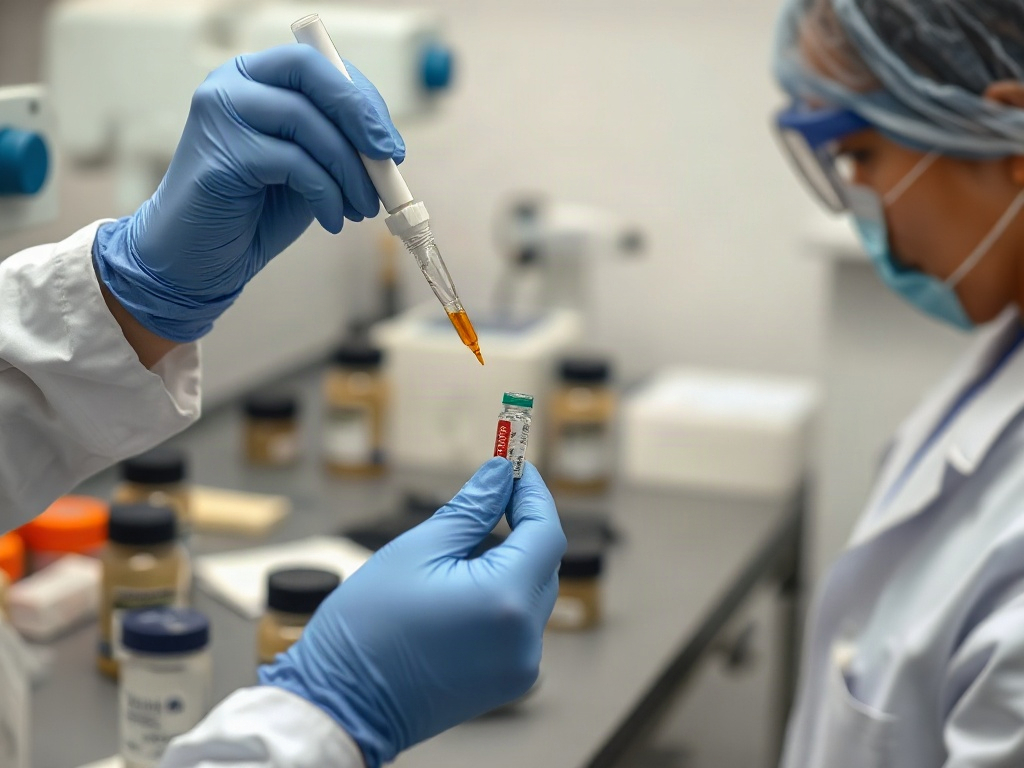
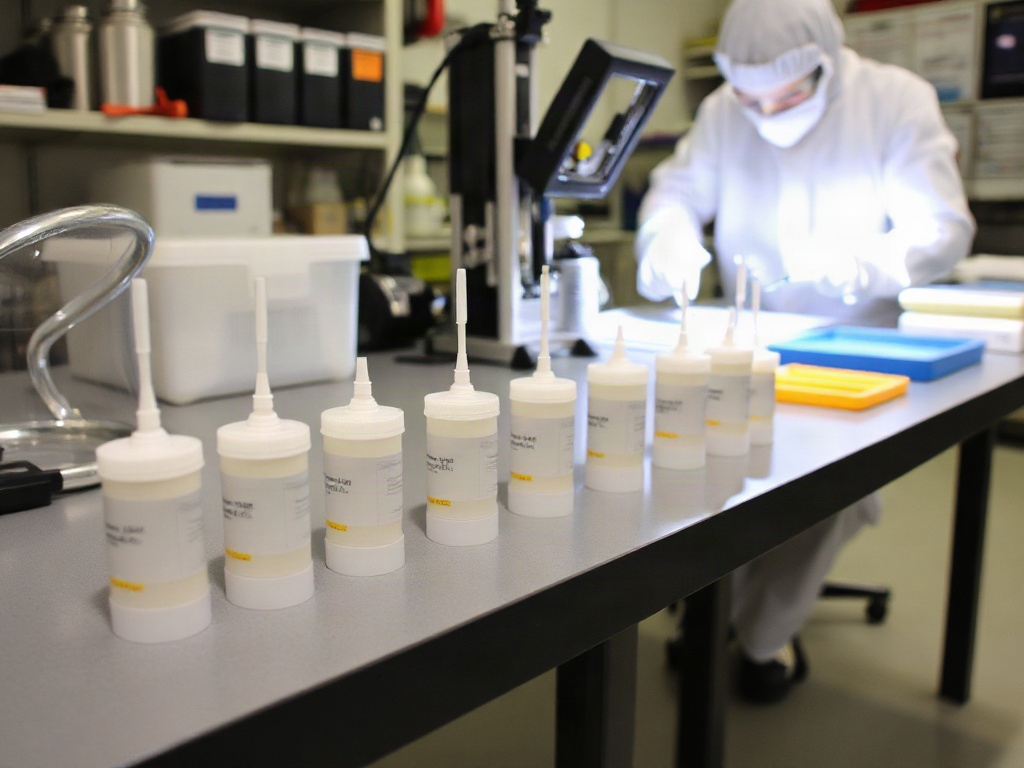
Adhesive deformulation is the analytical process of investigating an existing adhesive to understand its chemical composition and formulation structure.
It is also commonly described as:
- adhesive reverse engineering
- adhesive formulation analysis
- adhesive chemical analysis
- adhesive composition analysis
- competitor adhesive analysis
- adhesive product benchmarking
A commercial adhesive may contain much more than its primary polymer.
Depending on the product, the formulation may contain:
- polymers or resins
- curing agents
- solvents or water
- plasticizers
- tackifiers
- fillers
- catalysts
- stabilizers
- adhesion promoters
- specialty additives
The objective of deformulation is not simply to generate a list of chemical names.
The more useful objective is to understand what the product is made of, how the major formulation components work together, and which components are likely to be responsible for its performance.
Our Adhesive & Polymer Deformulation service is designed for manufacturers and product developers who need this type of information for benchmarking, reformulation, cost reduction, or new product development.
Why Develop an Adhesive From Scratch If You Already Have a Good Reference Product?
This is one of the most important questions in adhesive product development.
Imagine that you want to develop a construction adhesive.
You could start with a blank formulation and begin testing different polymers, fillers, plasticizers, solvents, tackifiers, and additives.
But you do not initially know which combination will provide the performance you need.
You may need to investigate:
- bond strength
- flexibility
- water resistance
- open time
- cure speed
- temperature resistance
- viscosity
- shelf stability
- substrate compatibility
- application behaviour
Every variable creates another development decision.
And every unsuccessful formulation consumes time and money.
Now consider a different starting point.
You already have an adhesive that performs well.
Perhaps it is:
- a competitor’s product
- an imported product
- a market-leading adhesive
- an existing product you want to improve
- a formulation that is becoming too expensive
- a product that you want to replace with your own formulation
Instead of asking:
“What formulation should we develop?”
you can begin by asking:
“What is already working in this product, and how can we use that information to develop our own formulation?”
That is where adhesive reverse engineering becomes valuable.
Adhesive Reverse Engineering Can Reduce Development Time
Traditional formulation development often involves extensive trial-and-error.
You test one polymer system.
Then another.
You adjust the filler loading.
The viscosity changes.
You modify the solvent system.
Now the drying characteristics are different.
You increase the resin concentration and improve bond strength, but the cost becomes too high.
You improve flexibility, but the heat resistance decreases.
This is normal formulation R&D.
The problem is that the development team may spend a significant amount of time exploring formulation directions that were never likely to work.
With Chemical Reverse Engineering, laboratory analysis provides a technical starting point before extensive formulation trials begin.
A typical development pathway looks like this:
Existing Adhesive
↓
Laboratory Analysis
↓
Formulation Structure
↓
Initial Formulation
↓
Prototype Samples
↓
Performance Testing
↓
Formulation Optimization
↓
Pilot Production
↓
Commercial Manufacturing
The major advantage is that the development team does not have to start by guessing the entire formulation architecture.
The existing product provides a benchmark.
That can reduce the number of formulation variables that need to be investigated during the early stages of development.
Depending on the product and analytical scope, the laboratory analysis stage can often be completed in a matter of weeks rather than requiring months of initial formulation experimentation. The complete project timeline depends on analytical complexity, reformulation, testing, and production requirements.
The Financial Advantage of Adhesive Deformulation
One of the biggest reasons companies consider reverse engineering is simple:
R&D costs money.
Every failed formulation consumes resources.
You may be paying for:
- raw materials
- laboratory personnel
- formulation trials
- analytical testing
- prototype production
- equipment time
- pilot batches
- performance testing
- failed production runs
There is also an opportunity cost.
While your technical team is trying to discover what might work, your competitors may already have a commercially proven product.
Adhesive deformulation does not eliminate R&D.
Instead, it can help move some of the uncertainty to the beginning of the project.
For example, laboratory analysis may help determine:
- the primary polymer or resin system
- major formulation components
- inorganic filler content
- additive systems
- solvent or carrier characteristics
- curing chemistry
- formulation architecture
This information can then be used to focus formulation trials on realistic development options.
The financial question therefore should not simply be:
“How much does adhesive deformulation cost?”
A more useful question is:
“How much unnecessary formulation work could we avoid by understanding the reference product first?”
For many small and mid-sized manufacturers, reducing months of unnecessary experimentation can be more valuable than minimizing the initial laboratory testing cost.
Lower Risk Does Not Mean Zero Risk
It is important to be realistic about what adhesive reverse engineering can and cannot do.
Laboratory analysis cannot always determine every formulation detail.
Complex commercial products may contain:
- proprietary raw materials
- mixtures of chemically similar components
- very low-concentration additives
- overlapping analytical signals
- proprietary processing conditions
The original manufacturer may also have manufacturing knowledge that cannot be determined from the finished product alone.
For that reason, professional deformulation should not be presented as a guarantee that a laboratory can simply reproduce a manufacturer’s confidential recipe.
The objective is different.
The objective is to obtain enough reliable analytical information to make better formulation decisions.
There is a major difference between:
Starting with little or no formulation information
and
Starting with analytical information from a proven commercial product.
That difference can reduce uncertainty and help your R&D team make more informed decisions.
Our How Chemical Reverse Engineering Works page explains our structured process, including technical feasibility, confidentiality, sample assessment, qualitative and quantitative analysis, and reformulation support.

What Can Be Learned From an Adhesive Sample?
There is no universal “adhesive deformulation test.”
The analytical program should be designed around the product and the questions you need answered.
Depending on the formulation, testing may involve:
- FTIR
- GC-MS
- HPLC
- LC-MS
- DSC
- TGA
- ICP-OES
- SEM-EDS
- microscopy
- other complementary analytical techniques
For example, FTIR may help identify polymer chemistry and functional groups.
GC-MS can be useful for investigating volatile and semi-volatile organic components.
HPLC or LC-MS may be appropriate for certain non-volatile organic compounds.
TGA can help evaluate thermal decomposition behaviour and provide information about organic and inorganic fractions.
DSC can provide information about thermal transitions and certain curing characteristics.
ICP-OES can provide elemental information that may help identify inorganic components, catalysts, or fillers.
SEM-EDS can help investigate particle morphology and elemental composition.
The important point is that more testing does not automatically mean better information.
The best analytical program is the one that answers the formulation questions that matter to your project.
Our Chemical Analysis Services cover a broad range of analytical techniques and are selected according to the product and development objective.
Which Adhesives Can Be Reverse Engineered?
Adhesive deformulation can be applied to many different adhesive technologies.
Pressure-Sensitive Adhesives
PSA systems are widely used in:
- labels
- tapes
- films
- mounting products
- industrial applications
- packaging
Reverse engineering can help investigate the relationship between polymer systems, tackifiers, plasticizers, fillers, and other additives.
Epoxy Adhesives
Two-component epoxy systems are commonly used for structural and industrial bonding.
Analysis can help investigate the resin system, curing components, fillers, modifiers, and other formulation characteristics.
Polyurethane Adhesives
PU adhesives are used in construction, industrial bonding, assembly, and other applications where flexibility and strong adhesion may be required.
Acrylic Adhesives
Acrylic formulations can be found in pressure-sensitive, structural, industrial, and specialty adhesive products.
Silicone Adhesives and Sealants
Silicone products may contain polymer systems, fillers, crosslinking components, catalysts, and performance additives.
Hot Melt Adhesives
Hot melt systems may contain EVA or other polymers together with tackifiers, waxes, fillers, stabilizers, and other modifiers.
Construction and Industrial Adhesives
These products can contain complex combinations of polymers, fillers, solvents or carriers, curing systems, and performance additives.
Our Adhesive & Polymer Deformulation service covers products ranging from pressure-sensitive adhesives and sealants to industrial bonding systems.

The Real Value Starts After the Deformulation Report
A laboratory report is useful.
But for most product developers, it is not the final objective.
The real question is:
“What can we do with this information?”
This is where formulation development and optimization become important.
Suppose your reference adhesive has excellent bonding performance but is too expensive.
You may want to:
- replace expensive raw materials
- identify functional alternatives
- reduce filler cost
- improve manufacturing efficiency
- reduce VOC
- improve shelf stability
- increase bond strength
- improve flexibility
- accelerate curing
- improve water resistance
- improve heat resistance
Instead of trying to reproduce the reference product blindly, the analytical results can become the starting point for your own formulation optimization program.
This is often where the commercial value of reverse engineering becomes much greater than the analytical report itself.
From Deformulation to Formulation Optimization
A typical project can move through several stages.
Stage 1 — Benchmark
Select a product that represents the performance you want to achieve.
Stage 2 — Analyse
Determine the major chemical and formulation characteristics.
Stage 3 — Reconstruct
Develop a technically reasonable formulation based on the analytical findings.
Stage 4 — Test
Prepare prototype samples and compare them with the benchmark.
Stage 5 — Optimize
Modify the formulation based on performance, cost, raw material availability, and manufacturing requirements.
Stage 6 — Scale
Move the formulation toward practical production.
This is why our approach is not limited to laboratory analysis.
The goal is to help transform analytical information into a usable commercial formulation.

Prototype Samples Matter
A formulation on paper is not a finished product.
At some point, you need to make it.
Prototype samples allow you to evaluate the formulation under real conditions.
For example, you may want to compare:
Prototype A: closest to the benchmark
Prototype B: lower raw material cost
Prototype C: higher bond strength
Prototype D: faster curing
Prototype E: improved water resistance
Prototype F: improved flexibility
The development process then becomes:
Analyse → Formulate → Test → Adjust → Test Again
That is much more useful than trying to decide whether a formula is good based solely on a laboratory report.
We Can Help Beyond Adhesive Deformulation
For many companies, laboratory analysis is only one part of the development project.
The bigger challenge is moving from:
“We know what is inside.”
to:
“We have a product we can manufacture and sell.”
Depending on the project, we can support several stages of that process.
Adhesive Deformulation
Understand the chemical composition and formulation structure of an existing adhesive.
Chemical Reverse Engineering
Use analytical information to establish a practical development starting point.
Formulation Development
Build a working formulation around the analytical findings and your performance requirements.
Formulation Optimization
Improve performance, cost, raw material selection, stability, or manufacturability.
Prototype Development
Prepare formulation samples for evaluation and comparison.
Raw Material Guidance
Identify appropriate raw materials and potential alternatives for formulation development.
Production Support
Help transition a laboratory formulation toward a practical manufacturing process.
Contract Manufacturing
For companies without suitable production facilities, contract manufacturing can provide a path from formulation development to commercial production.
Our Contract Manufacturing support is intended for companies that need to move from product development into scalable production without necessarily building their own manufacturing facility.
This creates a much more complete development pathway:
Deformulation → Reverse Engineering → Formulation → Optimization → Prototype → Scale-Up → Manufacturing

Why This Approach Works Well for U.S. Manufacturers
For many U.S. manufacturers, the challenge is not finding another laboratory that can run an FTIR test.
The challenge is finding a technical partner that understands what the analytical result needs to accomplish.
A manufacturer may already know:
- what the product needs to do
- what competitors are selling
- what price the market will accept
- what performance customers expect
- what production volume is required
What they may not know is the formulation structure behind the product.
That is where deformulation can bridge the gap between commercial requirements and formulation development.
Instead of spending months trying to determine the chemistry from scratch, you can begin with a proven market reference and use analytical information to guide the development process.
This is particularly useful for:
- U.S. manufacturers
- private-label brands
- specialty chemical companies
- industrial suppliers
- construction product manufacturers
- adhesive manufacturers
- contract manufacturers
- product development teams
- companies entering a new product category
We also support selected projects for companies outside the United States, including European manufacturers and product development teams.
Adhesive Reverse Engineering for Private-Label Products
Private-label companies often face a specific problem.
They know there is demand for a product.
They know which competitor products customers prefer.
But they do not necessarily have the formulation or the internal R&D resources to develop an equivalent product efficiently.
Reverse engineering can provide a practical development pathway.
For example:
Market Product
→ Deformulation
→ Formulation Development
→ Prototype
→ Performance Comparison
→ Optimization
→ Private-Label Product
This can allow a brand to build its own product rather than remaining dependent on an existing supplier.
It can also create greater control over:
- formulation
- raw materials
- production
- product specifications
- manufacturing cost
- supply chain
- future product improvements
Reverse Engineering Is Also Useful for Cost Reduction
You do not always need reverse engineering because you want to launch a competing product.
Sometimes the problem is much simpler:
Your existing adhesive has become too expensive.
Raw material prices change.
Suppliers change.
Minimum order quantities increase.
A previously economical formulation may no longer make sense.
Deformulation can help you understand where the cost is coming from.
For example, analysis may reveal opportunities involving:
- expensive resin systems
- unnecessary additives
- high filler costs
- inefficient solvent systems
- excessive use of premium raw materials
The next stage is formulation optimization.
The objective is not simply to make the cheapest possible adhesive.
It is to determine whether the formulation can be made more cost-effective without sacrificing the performance customers actually value.
When Should You Consider Adhesive Reverse Engineering?
Reverse engineering may be worth considering if:
- Your competitor’s adhesive performs better than yours
- You want to launch a private-label adhesive
- Your current supplier has discontinued a product
- Your imported adhesive has become too expensive
- Your formulation has inconsistent performance
- You want to reduce formulation costs
- You need to improve bond strength
- You want faster curing
- You want better water or temperature resistance
- You have already spent too much time on trial-and-error R&D
- You need to move from laboratory development toward commercial manufacturing
If you already have a product that performs well, there is usually value in understanding that product before investing heavily in a completely new formulation.
A More Efficient Way to Approach Adhesive R&D
The most expensive part of formulation development is not necessarily the laboratory analysis.
It can be the months spent testing the wrong ideas.
If you already have a product that demonstrates the performance you want, reverse engineering gives your development team a reference point.
Deformulation provides analytical information.
Reverse engineering turns that information into a formulation development starting point.
Formulation optimization adapts the formulation to your performance and cost requirements.
Prototype development determines whether the formulation actually works.
Scale-up and manufacturing support help move the product toward commercial production.
The complete pathway can therefore look like:
Existing Product
↓
Adhesive Deformulation
↓
Chemical Reverse Engineering
↓
Formulation Development
↓
Prototype Samples
↓
Performance Optimization
↓
Scale-Up
↓
Contract Manufacturing
↓
Commercial Product
For many small and mid-sized companies, this can be a more efficient way to approach adhesive product development than starting with a completely blank formulation sheet.
Have an Adhesive You Want to Analyse?
If you have an adhesive sample that you want to understand, benchmark, improve, or develop into your own product, start with the basic information.
You do not need to know the exact chemistry.
Tell us:
- What type of adhesive it is, if known
- What the adhesive is used for
- What performance you want to achieve
- Whether you have a competitor or reference product
- What you want to improve
- Your target development timeline
- Whether you need prototype development
- Whether you eventually need manufacturing support
We can review the project and determine what type of analytical and development approach makes sense.
Start Your Adhesive Reverse Engineering Project
Have an adhesive sample you want to investigate?
Contact FormulationAnalysis to discuss your project.
Email: info@formulationanalysis.com
Phone: +1 (859) 216-8899
Sample Receiving: 2225 Global Way, Hebron, KY 41048, United States
Explore our:
- Adhesive & Polymer Deformulation
- Chemical Reverse Engineering
- How Chemical Reverse Engineering Works
- Chemical Analysis Services
- Case Studies
- Contract Manufacturing
Send us your adhesive product information and tell us what you are trying to achieve. We will review the project and help you determine the most practical next step.