Why This Matters for U.S. Concrete & Construction Companies
If you’re an engineering firm, ready-mix supplier, or construction materials manufacturer in the U.S., you already understand the pressure:
- Rising raw material costs
- Margin compression from aggressive competitors
- Increasing demand for high-performance concrete (HPC)
- Tight project timelines with zero tolerance for failure
At the same time, developing a new polycarboxylate ether (PCE) superplasticizer from scratch can take 12–24 months, cost hundreds of thousands of dollars, and still fail to match market-leading products.
So what do most mid-sized companies do?
They buy a benchmark product, test it… and then hit a wall.
You can measure performance.
But you don’t know the formulation.
That’s where reverse engineering (deformulation) becomes a strategic advantage—not just a lab service.
Case Study: A Midwest Concrete Admixture Manufacturer
Background
A U.S.-based construction chemicals company (we’ll call them MidWest Admix Solutions) approached us with a clear objective:
“We need a high-performance superplasticizer equivalent to a leading European brand—but at a lower cost and with local production.”
They were already distributing a third-party admixture but faced three critical problems:
- High procurement cost (imported product)
- Unstable supply chain
- No formulation ownership (zero control over optimization)
They wanted to:
- Launch their own branded product
- Match slump retention and water reduction performance
- Reduce cost by at least 15–25%
- Scale production within 3–6 months
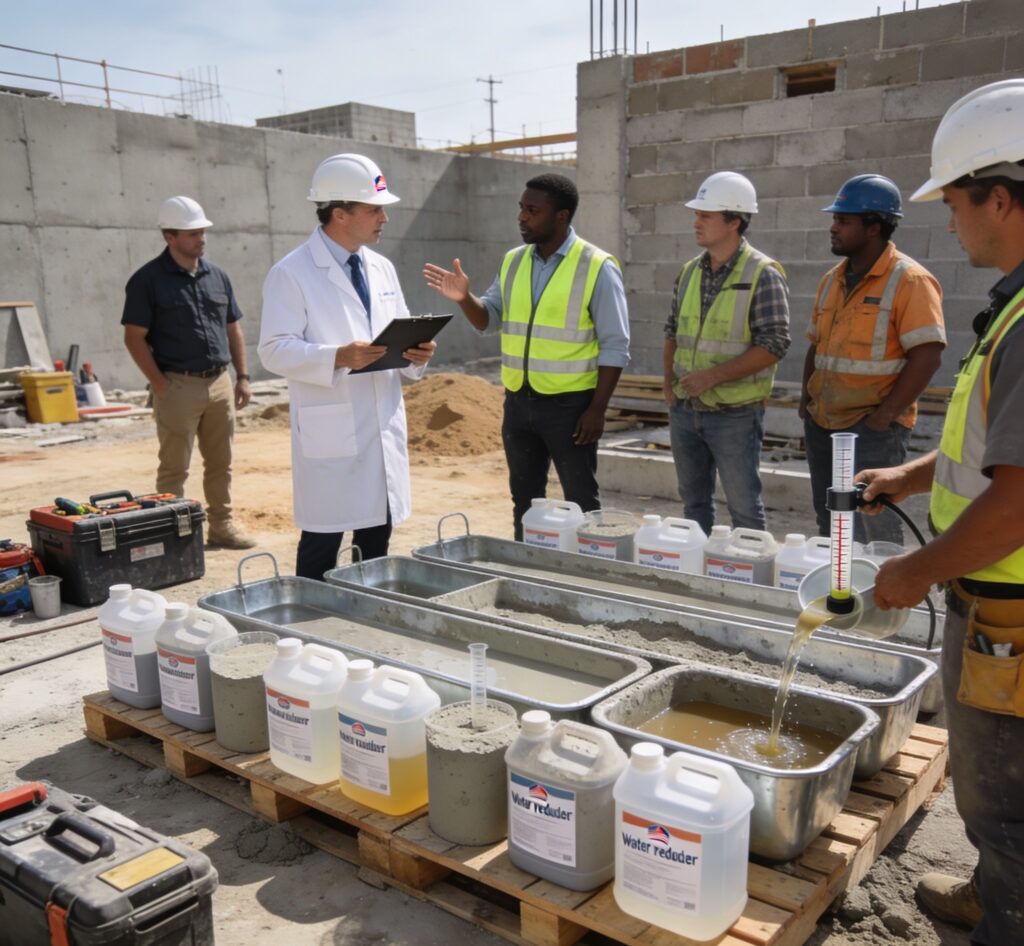
The Core Challenge: PCE Superplasticizer Complexity
Polycarboxylate superplasticizers are not simple blends.
Their performance depends on:
- Polymer backbone structure
- Side-chain length (PEG units)
- Charge density
- Molecular weight distribution
- Functional additives (defoamers, retarders, stabilizers)
Two products may look identical in performance tests—but differ significantly in cost structure and manufacturability.
Without knowing:
- The monomer ratio
- The polymer architecture
- The additive package
…it’s almost impossible to replicate performance reliably.
Step 1: Benchmark Product Selection
We advised the client to select one target product already validated in their market.
This is critical.
Many companies make the mistake of:
- Testing 3–5 products at once
- Trying to “average” performance
That leads to confusion and inconsistent formulation goals.
Instead, we focused on:
- One top-performing PCE superplasticizer
- Known performance metrics:
- Water reduction rate (>25%)
- Slump retention (>90 min)
- Compatibility with local cement types
Step 2: Full Deformulation (Reverse Engineering)
We conducted a complete qualitative + quantitative analysis, including:
1. Polymer Structure Analysis
- Determined backbone composition (acrylic acid vs methacrylic acid)
- Identified PEG side chain length distribution
- Estimated molecular weight profile
2. Monomer Ratio Reconstruction
- Carboxylic acid content
- Ether side chain percentage
- Functional monomer presence
3. Additive System Identification
- Defoamer type and concentration
- Retarder components
- Stabilizers and preservatives
4. Solid Content & Formulation Balance
- Active polymer %
- Water content
- Minor components (<1%)
We achieved:
±0.1–0.3% accuracy for major components
This level of precision is sufficient for:
- Industrial replication
- Scale-up production
- Performance consistency
👉 Related: How accurate is formulation analysis?
👉 Related: What components can be identified in chemical reverse engineering?
Step 3: Performance Correlation Testing
Reverse engineering alone is not enough.
We correlated the reconstructed formulation with real-world concrete performance:
- Slump flow
- Setting time
- Air content
- Compressive strength (1d, 7d, 28d)
We tested:
- Original product
- Reconstructed formulation
- Variants with slight modifications
This step is where most labs fail—they stop at composition.
We go further:
Link chemistry → performance → cost
Step 4: Cost Optimization Through Formulation Engineering
Once the baseline formulation was confirmed, we moved to cost reduction without performance loss.
Key Optimization Strategies
1. Side Chain Adjustment
- Reduced PEG chain length slightly
- Maintained dispersion efficiency
- Lowered raw material cost
2. Monomer Substitution
- Replaced part of high-cost monomers with locally available alternatives
- Adjusted charge density to compensate
3. Additive Simplification
- Removed redundant stabilizers
- Optimized defoamer dosage
4. Solid Content Optimization
- Increased active content slightly
- Reduced logistics and storage cost
Final Outcome
Within 10 weeks, the client achieved:
- ✅ A fully owned PCE superplasticizer formulation
- ✅ Performance equivalent to the benchmark product
- ✅ ~22% cost reduction
- ✅ Successful pilot-scale production
- ✅ Market-ready product within 4 months total
They transitioned from:
“Distributor with no control”
to
“Manufacturer with proprietary formulation”
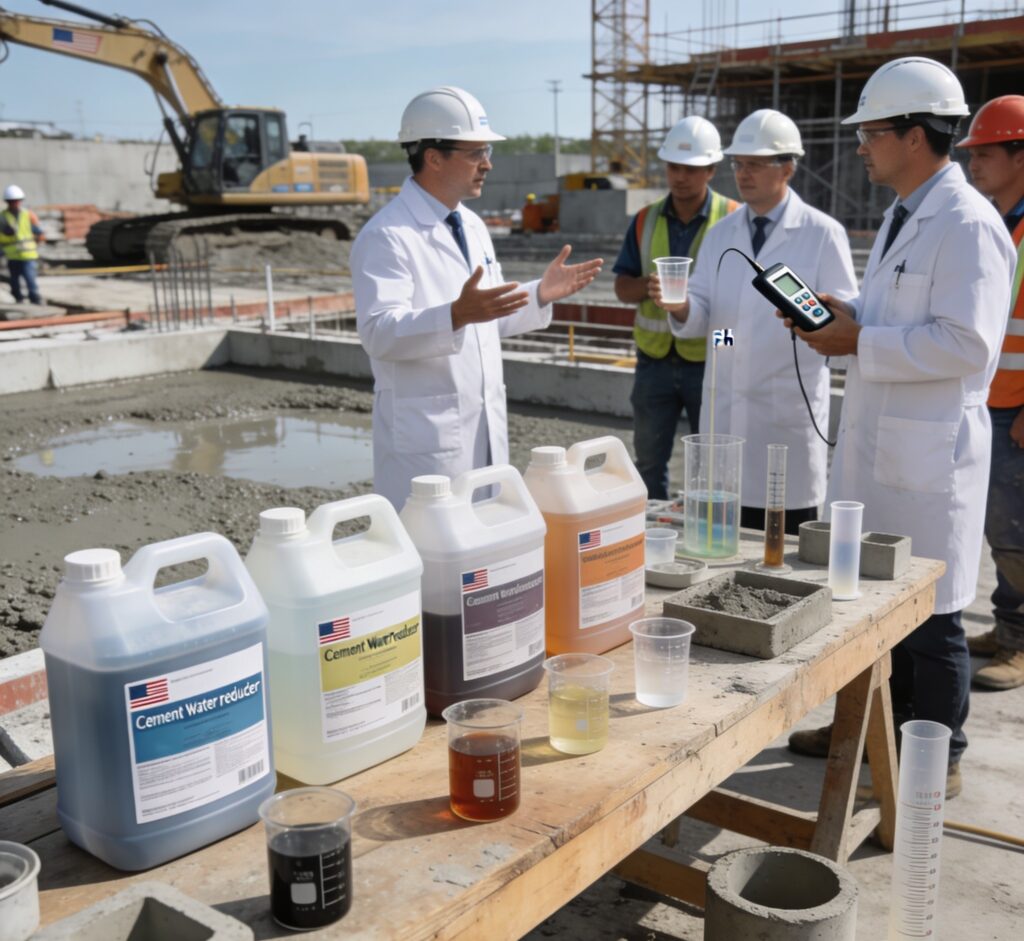
Why Reverse Engineering Works (and When It Doesn’t)
It Works Best When:
- You already have a target product
- Performance requirements are clearly defined
- You need speed to market
- You want to reduce R&D risk
It Doesn’t Work Well When:
- No benchmark product exists
- You’re trying to invent a completely new chemistry
- Performance metrics are unclear
Common Pain Points We Solve for U.S. Companies
1. “We Want Our Own Product—but Don’t Have the Formula”
This is the most common scenario.
You have:
- Market demand
- Sales channels
- Customer feedback
But no formulation IP.
👉 Solution: Reverse engineer → modify → brand your own product
2. “Our Current Supplier Is Too Expensive”
Importing admixtures or buying from large multinationals eats margins.
👉 Solution:
- Analyze their product
- Rebuild it locally
- Optimize cost structure
3. “Our R&D Is Too Slow”
Internal labs often lack:
- Advanced analytical equipment
- Polymer expertise
- Time
👉 Solution:
- Skip trial-and-error
- Start from a known working formulation
4. “We Need to Launch Fast”
Construction projects don’t wait.
👉 Solution:
- Reduce development cycle from 18 months → 2–4 months
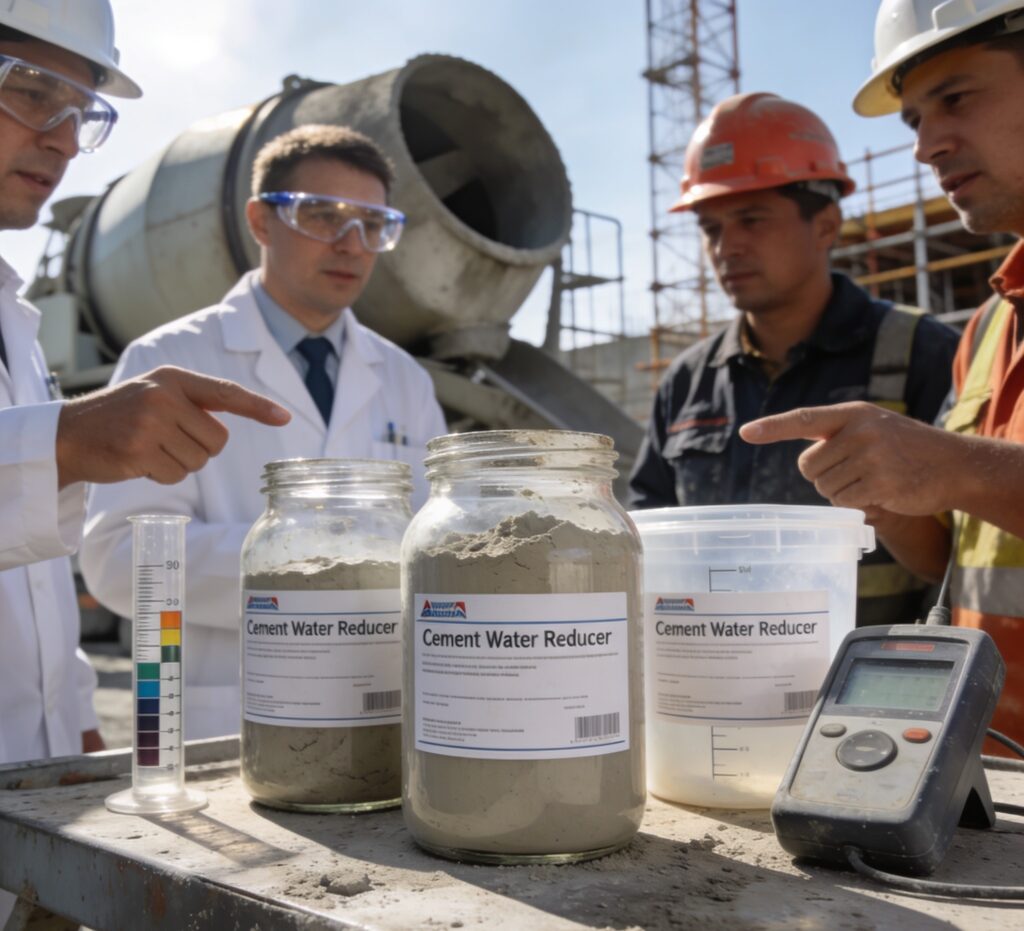
What You Actually Receive
When working with us, you don’t just get a lab report.
You get:
- Full formulation breakdown (components + %)
- Polymer structure insights
- Performance comparison data
- Optimization recommendations
- Technical consultation for production
👉 Related: What does a formulation analysis report include?
👉 Related: From lab analysis to manufacturing: what’s the next step?
From Analysis to Production
Many clients ask:
“Can we actually manufacture this?”
Yes—but success depends on:
- Reactor capability
- Process control
- Raw material sourcing
We support:
- Process guidance
- Raw material recommendations
- Scale-up troubleshooting
Why U.S. SMEs Choose This Approach
Compared to traditional R&D:
| Approach | Time | Cost | Risk |
|---|---|---|---|
| In-house R&D | 12–24 months | High | High |
| Trial-and-error | Unpredictable | Medium | Very High |
| Reverse Engineering | 4–12 weeks | Controlled | Low |
The Strategic Advantage
Reverse engineering is not about copying.
It’s about:
- Understanding what works
- Identifying why it works
- Building something better and cheaper
That’s how you compete with:
- Large chemical companies
- Imported products
- Private label suppliers
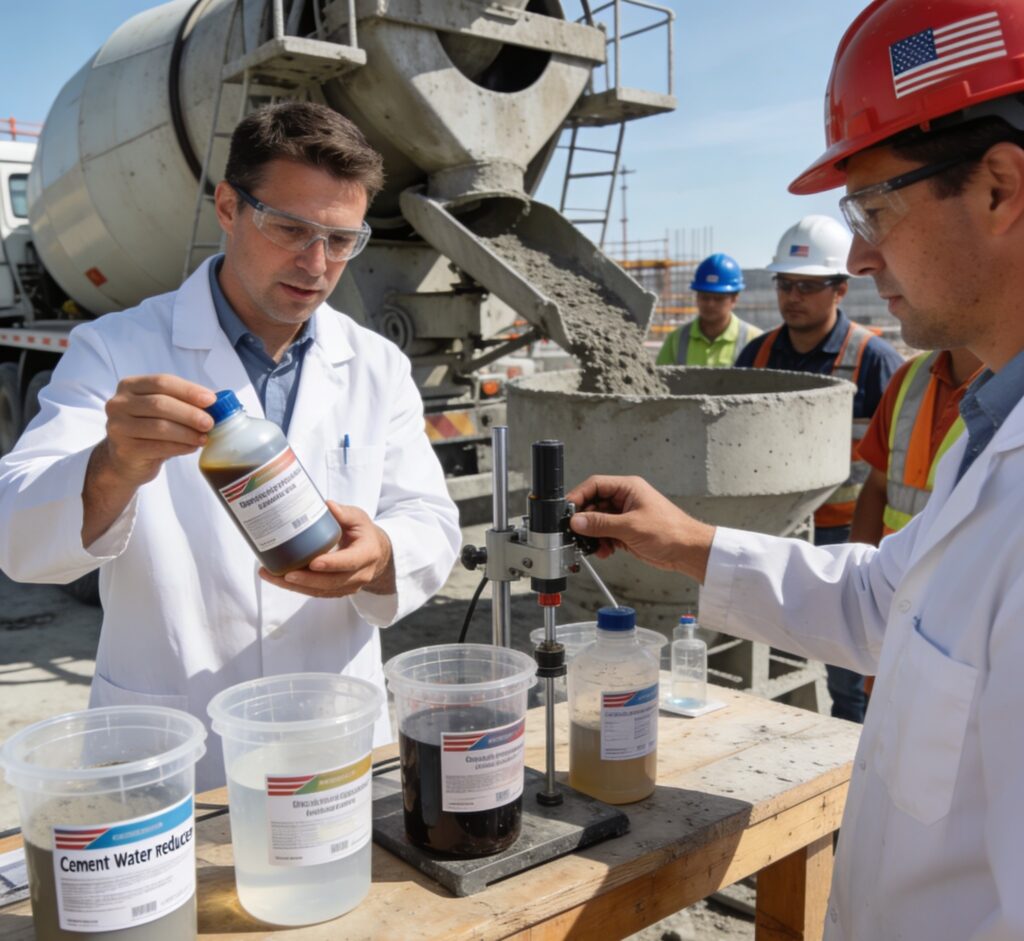
Ready to Develop Your Own Superplasticizer?
If you are:
- A concrete admixture manufacturer
- A construction chemical distributor
- An engineering or materials company
…and you want to:
- Launch your own product
- Reduce formulation cost
- Shorten development time
- Gain full control over your supply chain
Then reverse engineering is your fastest path forward.
Get a Technical Evaluation
Start with a simple step:
- Send us your target product (or MSDS if available)
- Our engineers will evaluate feasibility
- You’ll receive a clear scope, risks, and quotation
Contact Us
FormulationAnalysis (USA)
Email: info@formulationanalysis.com
Website: www.formulationanalysis.com
Or submit your request here:
👉 Request a formulation analysis consultation
Final Thought
The formula you need already exists.
The question is:
Do you want to spend years reinventing it—or weeks understanding and improving it?