Turning Best-Selling Products into Your Own Brand—Without Guesswork
For small and emerging cosmetic brands in the U.S., one of the biggest challenges is speed: how do you go from idea to shelf-ready product without spending 12–18 months on R&D?
Most founders already know what sells. You see it on Amazon, Sephora, TikTok, or in retail chains—certain moisturizers, serums, shampoos, and sunscreens consistently outperform others. The real problem isn’t what to make.
It’s how to replicate, improve, and launch it under your own brand—quickly, safely, and profitably.
This is where cosmetic reverse engineering services and formulation analysis labs come in.
The Real Pain Point: You Know the Product—But Not the Formula
Small brands, private label businesses, and eCommerce operators typically follow this path:
- Identify a best-selling product
- Purchase samples
- Try to “replicate” via contract manufacturers
- Go through multiple failed iterations
- Spend thousands on trial-and-error
The result?
- ❌ Unstable formulations
- ❌ Poor performance vs. benchmark
- ❌ High development costs
- ❌ Delayed product launch
What they lack is accurate formulation insight.
Without knowing:
- Exact ingredient composition
- Functional ingredient roles
- Active concentration levels
- Processing methods
…it’s almost impossible to match or exceed a successful product.
Case Study: From Benchmark Product to Market-Ready Brand in 8 Weeks
Client Background
A U.S.-based skincare startup wanted to launch a hydrating serum similar to a top-selling product on Amazon.
Their goals were clear:
- Match performance of the benchmark product
- Reduce greasy feel (improve skin absorption)
- Lower production cost by 20%
- Launch under their own brand within 2–3 months
They had:
- A physical sample
- A general ingredient list (from label)
- No formulation details
Step 1: Cosmetic Product Benchmark Analysis
We started with a full cosmetic product benchmark analysis using advanced lab techniques.
What We Identified:
- Full ingredient profile (qualitative analysis)
- Approximate percentage composition (quantitative analysis)
- Emulsifier system and stability structure
- Active ingredients and functional additives
- Preservative system
This is the critical step most brands skip.
Label information is not enough.
INCI lists do not reveal percentages or formulation logic.
Step 2: Cosmetic Reverse Engineering
Using the analytical data, we reconstructed a base formulation prototype.
This included:
- Replicating the emulsion system
- Matching viscosity and texture
- Reproducing sensory profile (spreadability, absorption)
- Aligning active ingredient performance
At this stage, the client already had something extremely valuable:
A working formulation very close to a proven best-seller
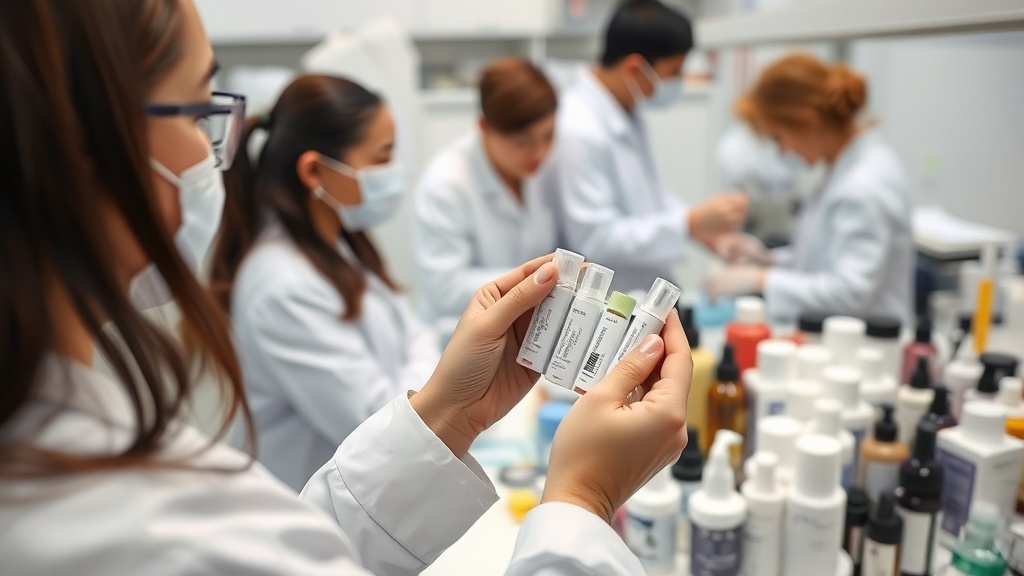
Step 3: Formulation Optimization (Make It Better & Cheaper)
Replication alone is not enough—you need differentiation.
We optimized the formulation based on the client’s commercial goals:
Improvements Made:
- Reduced oil phase to eliminate greasy residue
- Replaced high-cost actives with equivalent functional alternatives
- Enhanced absorption using penetration modifiers
- Improved stability for wider temperature conditions
Result:
- ✅ 22% reduction in raw material cost
- ✅ Improved skin feel vs. original product
- ✅ Maintained core performance metrics
This is where formulation analysis labs create real business value—not just copying, but strategic optimization.
Step 4: Raw Material Sourcing
Many small brands struggle with sourcing:
- Minimum order quantities (MOQ) too high
- Unreliable suppliers
- Inconsistent quality
We provided:
- Verified raw material suppliers in the U.S.
- Cost-effective alternatives for key ingredients
- Documentation support (COA, SDS, compliance)
This ensured:
- Regulatory alignment
- Supply chain stability
- Scalable production
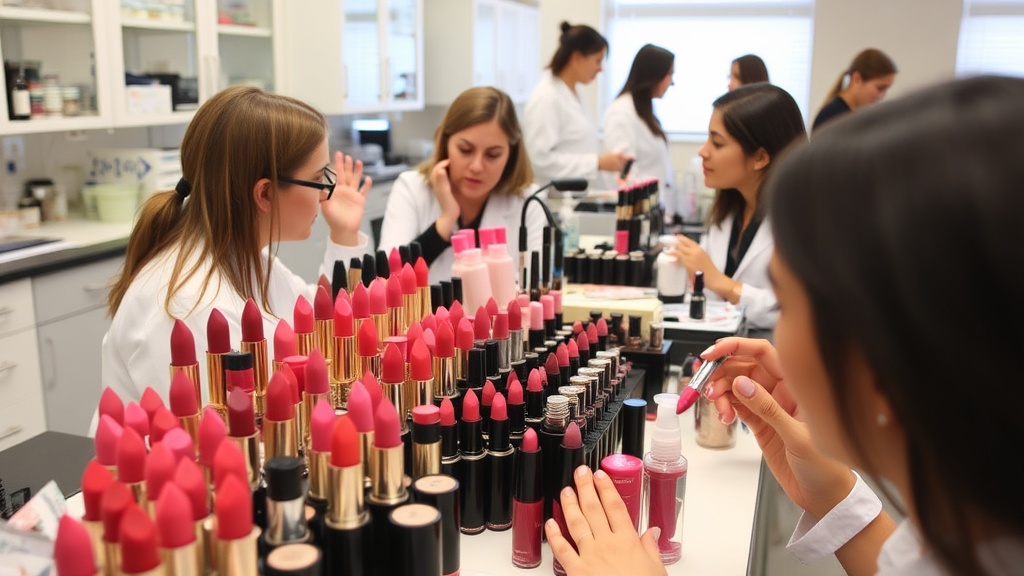
Step 5: Manufacturing & Contract Production Support
Having a formula is not enough—you need to produce it reliably.
We assisted with:
- Manufacturing process guidelines
- Batch scaling instructions
- Equipment recommendations
- Contract manufacturer matching
For this client, we connected them with a U.S.-based contract manufacturer capable of:
- Small initial batch runs
- Cosmetic GMP compliance
- Fast turnaround
Step 6: From Lab to Market—Fast
Timeline Achieved:
- Week 1–2: Sample analysis & reverse engineering
- Week 3–5: Formulation optimization
- Week 6–8: Pilot production & adjustments
Total: ~8 weeks to production-ready formula
Compare that to traditional R&D timelines:
- 6–12 months (or longer)
Why Reverse Engineering Works for Cosmetic Brands
1. Start from a Proven Market Winner
Instead of guessing what works, you:
- Benchmark real top-selling products
- Reduce market risk
- Align with proven consumer demand
2. Minimize Trial-and-Error Costs
Without reverse engineering:
- Multiple failed prototypes
- High formulation costs
- Wasted time
With reverse engineering:
- Data-driven formulation
- Faster iteration
- Lower total development cost
3. Accelerate Time-to-Market
Speed is critical in:
- eCommerce
- TikTok-driven trends
- Seasonal product cycles
Reverse engineering allows you to:
- Launch in weeks, not months
- Capitalize on trends quickly
4. Full Control Over Your Brand
Unlike private label:
- You own the formulation
- You control quality
- You can modify and scale freely
Who Needs Cosmetic Reverse Engineering Services?
This approach is ideal for:
1. eCommerce Brands (Amazon, Shopify)
- Want to replicate trending products
- Need fast product launches
2. Private Label Businesses
- Want to move from generic products to branded formulas
3. Retail Chains & Salons
- Expanding product lines
- Benchmarking competitor products
4. Startups Without R&D Teams
- Need expert support from analysis to manufacturing
What Makes a High-Quality Formulation Analysis Lab?
Not all labs are equal. When choosing a partner, look for:
Technical Capabilities
- Advanced analytical instruments (GC-MS, HPLC, FTIR)
- Experience with complex cosmetic systems
Industry Knowledge
- Understanding of emulsions, surfactants, actives
- Familiarity with U.S. regulatory requirements
End-to-End Support
- Reverse engineering
- Formulation optimization
- Raw material sourcing
- Manufacturing guidance
Final Takeaway: Launch Faster, Safer, and Smarter
If you already know which cosmetic products sell well, the smartest move is not to reinvent the wheel.
It’s to:
Analyze → Replicate → Optimize → Launch
Reverse engineering allows you to:
- Reduce development time by up to 70%
- Cut formulation costs significantly
- Enter the market with confidence
Ready to Benchmark Your Next Cosmetic Product?
If you have a product in mind—whether it’s a serum, shampoo, sunscreen, or cream—we can help you:
- Identify its full formulation
- Recreate and improve it
- Prepare it for scalable production
Start with a sample. End with a market-ready product.
Contact Us
Formulation Analysis Lab – USA
- Cosmetic reverse engineering services
- Formulation optimization
- Raw material sourcing
- Contract manufacturing support
👉 Submit your sample today and get a detailed evaluation.