Industry: Pet Care / Grooming Client Type: U.S.-based pet retail chain (multi-location) Product Category: Pet cologne / fragrance spray Challenge: Decode a target market fragrance, overcome a critical fragrance solubility failure, and develop a manufacturable formula Outcome: Shelf-ready product achieved after 40+ guided iterations, launched ahead of schedule, with significant savings in wasted development spend
The Opportunity: A Pet Category That Smells Like Money
The U.S. pet care market has grown steadily for over a decade, and the grooming segment is no exception. Pet colognes and fragrance sprays — once a niche grooming salon add-on — have become a mainstream retail product category, driven by pet humanization trends and the willingness of American pet owners to spend on premium experiences for their animals.
Our client, a regional pet retail chain with locations across multiple states, had done their homework. Through in-store feedback, online community engagement, and competitor sales data, they had a clear picture of what their customers wanted: a light, fresh fragrance profile that was long-lasting without being overwhelming, formulated specifically for dogs, and safe enough that customers would feel confident using it between grooming appointments.
They had even identified the product in the market that best matched their customers’ preferences. What they needed was to understand what made it work — and build something better under their own brand.
Step 1: Reverse Engineering the Target Fragrance
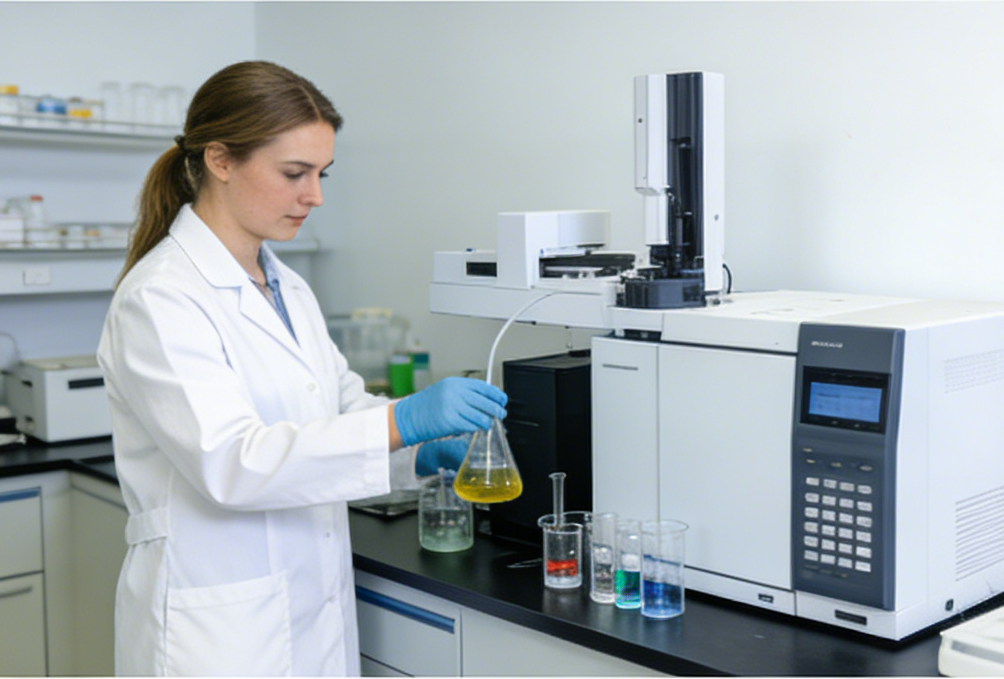
The client submitted the reference product — a commercially purchased dog cologne spray — to our Kentucky receiving facility. Pet fragrance formulations present a distinctive analytical challenge: the active scent system is typically a complex multi-component fragrance concentrate blended into a carrier matrix, and the INCI declaration on a consumer product gives almost no useful compositional detail beyond “fragrance” or “parfum.”
We applied a targeted analytical sequence to the sample:
- Headspace GC-MS to capture and identify volatile aromatic compounds released from the product — the components the nose actually detects
- Direct injection GC-MS to characterize the full organic fraction including fixatives, carrier solvents, and lower-volatility scent modifiers
- FTIR to identify the carrier system, humectants, and any conditioning agents present
- Solvent system analysis to establish the alcohol-to-water ratio and identify co-solvents contributing to fragrance stability and skin feel
The analysis identified the primary fragrance notes — a citrus-forward top note built on limonene and linalool derivatives, supported by a floral mid note and a light musked base — along with the solubilizer system that kept the fragrance concentrate stable and evenly dispersed in the water-alcohol carrier.
The client received a full compositional brief: ingredient categories, approximate concentration ranges, functional roles of each component, and sourcing guidance for domestic fragrance suppliers. For a product whose label contained only ten ingredients, the analytical picture was considerably more detailed.

Step 2: The Problem Nobody Warned Them About
Armed with the analytical brief, the client’s in-house team began bench-scale development. This is where the project took a turn that will be familiar to anyone who has tried to formulate a fragrance product for the first time.
The fragrance concentrate they sourced — matched to the profile identified in the analysis — would not stay in solution.
At the target concentration, the fragrance separated from the water-alcohol carrier within hours of mixing, producing a visibly cloudy, unstable product with an oily surface layer. Adjusting the alcohol ratio helped partially but introduced a new problem: the modified carrier felt harsh and drying on pet coats in application testing.
The client tried four different fragrance concentrations. They tried two different alcohol grades. They reformulated the carrier three times. Nothing held.
After six weeks of internal attempts and growing frustration, they came back to us — not for more analysis, but for formulation guidance.
Step 3: Diagnosing the Solubility Failure
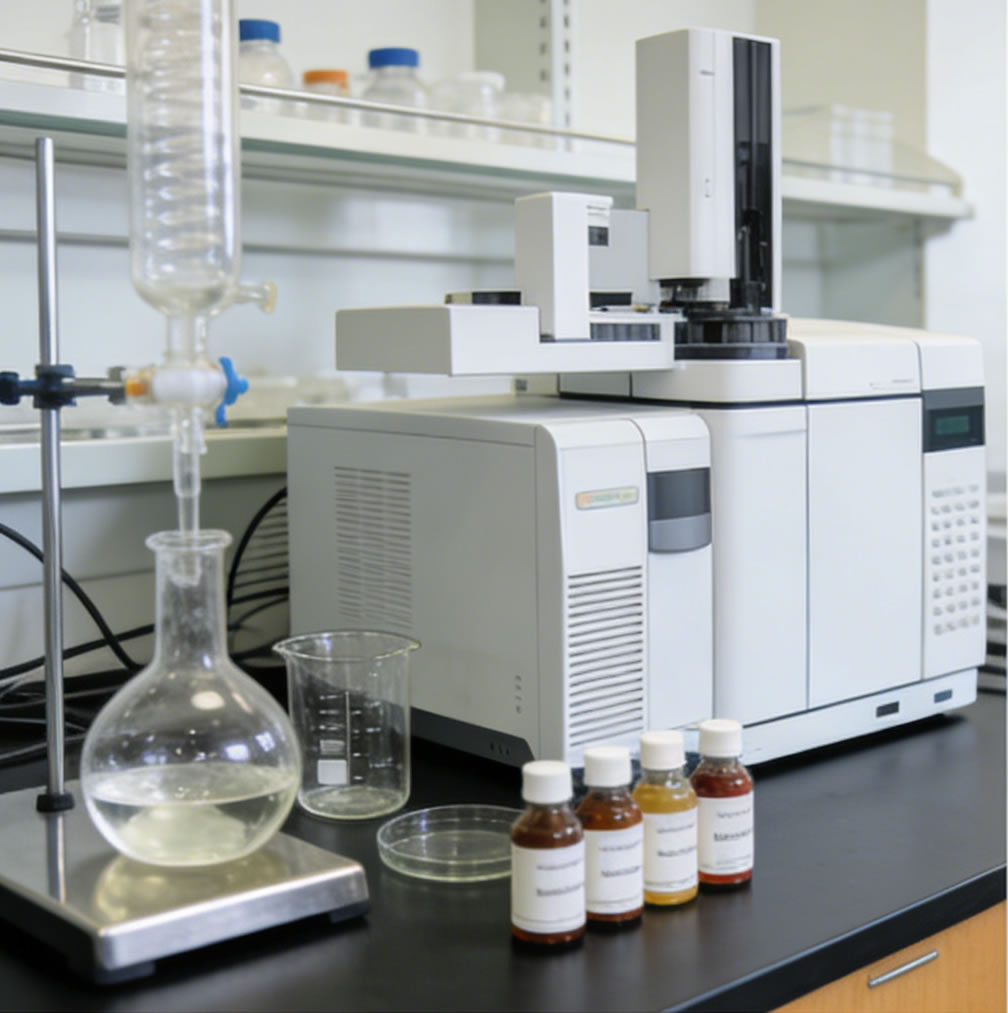
The root cause was a solubilizer mismatch. The fragrance concentrate the client had sourced, while compositionally similar to the reference product’s scent profile, had a higher proportion of non-polar aromatic compounds than the original. These compounds require a stronger hydrophilic-lipophilic balance in the solubilizer system to remain stably dispersed in a water-dominant carrier.
The reference product used a polysorbate-based solubilizer at a ratio calculated to its specific fragrance load. The client’s sourced fragrance, being slightly more hydrophobic, needed either a higher solubilizer loading, a different solubilizer chemistry, or a reformulated carrier with a modified co-solvent profile — or some combination of all three.
What appeared to be a simple substitution was actually a formulation system problem. No amount of trial-and-error without understanding this underlying principle would have produced a stable result.
We walked the client’s team through the technical fundamentals: how HLB (hydrophilic-lipophilic balance) values govern fragrance-solubilizer compatibility, how alcohol percentage affects the cloud point of non-ionic surfactant systems, and how to calculate target solubilizer ratios from first principles rather than guessing. This knowledge transfer was deliberate — we wanted their team to understand the mechanism, not just follow a recipe, so they could troubleshoot independently going forward.

Step 4: 40+ Iterations, Guided to a Result
What followed was an intensive bench development phase. The client’s team conducted over 40 formulation iterations across approximately eight weeks, with FormulationAnalysis LLC providing technical review and guidance at each stage.
The iterations were not random. Each round was structured around a specific variable:
- Rounds 1–8: Solubilizer type screening (polysorbate 20, polysorbate 80, PEG-40 hydrogenated castor oil, and combinations)
- Rounds 9–16: Solubilizer loading optimization at fixed fragrance concentration
- Rounds 17–24: Carrier alcohol percentage adjustment with stability monitoring at 24h, 72h, and 7-day intervals
- Rounds 25–32: Co-solvent screening (propylene glycol, dipropylene glycol, and alternatives) for coat-feel improvement
- Rounds 33–40+: Final fragrance load optimization, preservative integration, and pH stabilization
At each stage, the client shared results — visual clarity, stability timeframes, odor profile, application feel — and we provided interpretation and direction for the next round. We flagged when a variable had been sufficiently explored and when results suggested a different direction entirely. This prevented the team from continuing down unproductive paths, which had been the pattern in their earlier, unguided attempts.
By iteration 43, the formula was stable at 72 hours, seven days, and 30 days under accelerated conditions. The scent profile matched the target closely. The application feel on pet coats — tested by the client’s grooming staff — was approved without reservation.
What the Guidance Actually Saved
The client’s team was capable and motivated. What they lacked was the formulation framework to interpret their results and make efficient decisions about what to test next. Without structured guidance, the iteration process tends to become circular — changing multiple variables at once, misattributing results, and repeating work that has already been done in a slightly different form.
By providing a structured testing framework and ongoing technical interpretation, we estimate the guidance phase eliminated between 60 and 80 redundant iterations that would otherwise have occurred. At the client’s internal cost of materials, lab time, and staff hours, that represented savings of approximately $12,000 to $18,000 in avoided development spend — before accounting for the time value of a faster launch.
The product reached manufacturing readiness approximately 10 weeks ahead of the client’s original internal estimate.
The Outcome
The finished pet cologne launched in the client’s retail locations and online store on schedule — in fact, ahead of the revised internal timeline. Key outcomes included:
- Stable, clear formula achieved after 43 guided iterations, with 30-day accelerated stability confirmed
- Scent profile matched to target market preferences the client had already validated with their customer base
- Coat-feel performance approved by in-house grooming professionals before manufacturing commitment
- Full ingredient list prepared for U.S. label compliance, with pet-safe ingredient verification completed
- An internal team that now understands fragrance solubilization from first principles — capable of managing future fragrance line extensions without starting from zero
- Estimated $12,000–$18,000 saved in avoided redundant development spend
- Product launched approximately 10 weeks ahead of original internal estimate
The client has since engaged us for analysis of two competitor grooming products — a conditioning spray and a deodorizing shampoo — as part of a planned private label grooming line expansion.
What This Case Illustrates
Reverse engineering a successful fragrance product is only part of the challenge. The analytical brief tells you what is in the product. It does not automatically tell you how to recreate it — particularly when the ingredients you source differ in subtle but consequential ways from those in the original.
The gap between “knowing what’s in it” and “being able to make it” is where most private label fragrance development projects stall. That gap is a formulation knowledge problem, not an ingredient sourcing problem.
For brands without a dedicated formulation chemist on staff — which describes the majority of small and mid-sized pet product companies — access to structured technical guidance during the bench development phase is often the difference between a product that launches and one that stays in development indefinitely.
The 40+ iterations in this project were not a sign of difficulty. They were a sign of a disciplined, structured process. Every iteration generated useful data. None were wasted.
Ready to Start Your Pet Product Development?
Whether you are looking to understand a competitor’s formulation, develop a private label grooming product, or troubleshoot a formulation problem that has stalled your launch, FormulationAnalysis LLC can help — from initial analysis through to manufacturing-ready formula brief.
We work with pet brands, retail chains, private label developers, and contract manufacturers across the United States. All projects handled under strict confidentiality. NDA available upon request.
FormulationAnalysis LLC
Email: info@formulationanalysis.com
Phone: (859) 216-8899
Sample Receiving: 2225 Global Way, Hebron, KY 41048
Website: www.formulationanalysis.com
Serving clients across the United States. Contact us to discuss your project scope and timeline.